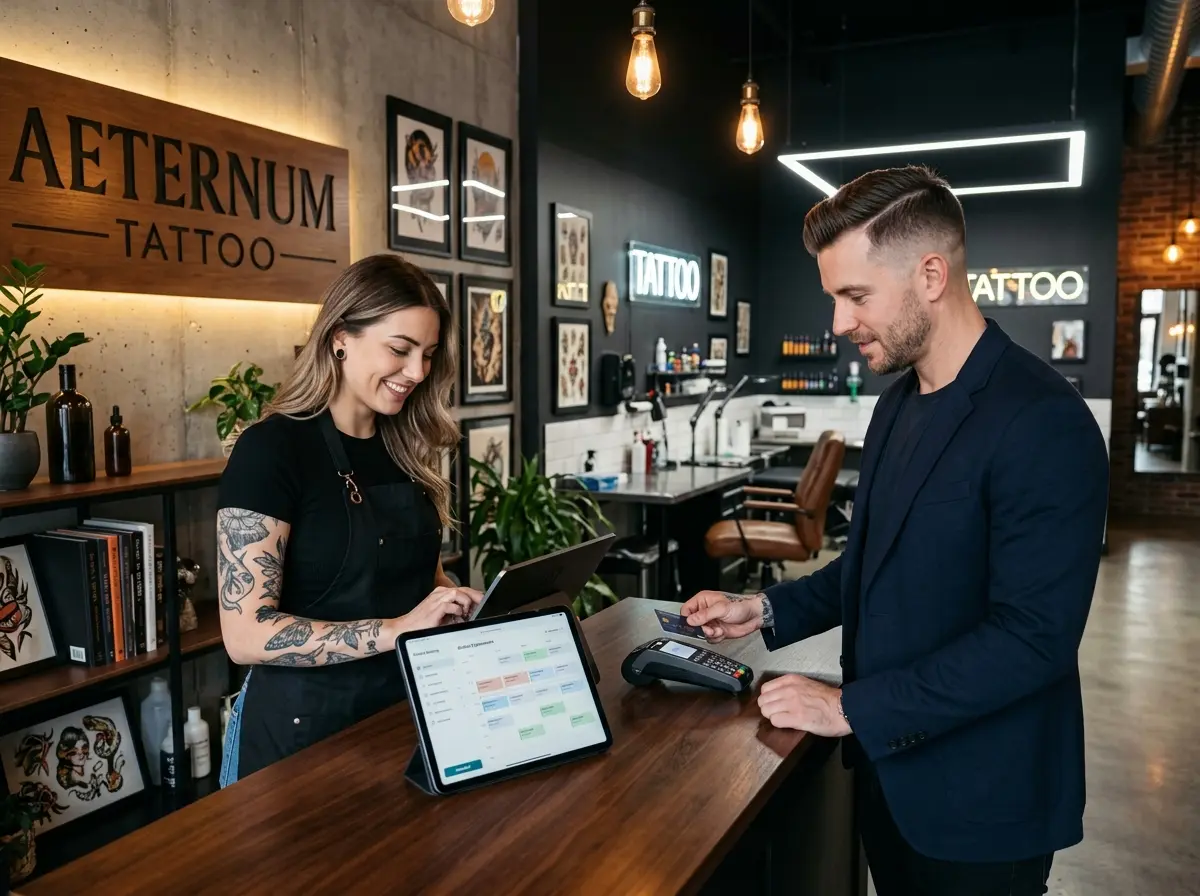
Introduction: Because "Just DM Me" Is Not a Business Strategy
Let's talk about the tattoo industry's favorite pastime: chasing down clients for deposits. You've got a packed schedule, a waitlist that would make a Michelin-star restaurant jealous, and somehow you're still spending twenty minutes per booking playing phone tag, sending follow-up texts, and explaining — for the third time — why yes, a deposit is required. Radical concept, we know.
Here's the thing: deposit-based online scheduling isn't just a nice-to-have for tattoo studios. It's the difference between a calendar full of serious clients and a calendar full of people who "totally meant to show up." No-shows in the tattoo industry cost studios an average of hundreds of dollars per missed appointment when you factor in lost chair time, blocked slots, and the artist's prep work. Deposits solve that problem — but only if your booking system is set up correctly.
This guide walks you through building a deposit-based online scheduling flow that actually works: one that collects money upfront, gathers the right client information, reduces back-and-forth, and makes your studio look as professional as the work coming out of it.
Building Your Deposit System the Right Way
Choosing the Right Booking Platform
Not all booking platforms are created equal, and for tattoo studios specifically, you need one that supports partial payments or deposit collection at the time of booking. Platforms like Square Appointments, Vagaro, Booksy, and Fresha all offer deposit functionality — though the specifics vary. Before committing to any platform, ask these questions:
- Can I require a deposit as a percentage of the estimated total, or only a flat fee?
- Does the deposit automatically apply toward the final balance?
- What happens to the deposit if the client cancels — and can I set my own policy?
- Can I send automated reminders before the appointment?
- Does the platform allow for custom intake forms?
That last point matters more than most studio owners realize. Getting deposit in hand is step one. Getting the reference images, skin type notes, placement preferences, and allergy disclosures before the appointment is what turns a good session into a great one — without the frantic email chain the night before.
Setting Your Deposit Amount and Policy
Industry standard deposits typically range from $50 to $200 for most custom work, though some studios charge a percentage (commonly 20–30%) for larger pieces. There's no universal right answer, but your deposit should be meaningful enough that canceling it actually stings — while not being so high that it creates friction for first-time clients who are still building trust with your studio.
Your cancellation and rescheduling policy needs to be crystal clear at the time of booking — not buried in a confirmation email, not mentioned verbally at the end of a phone call. Display it prominently on your booking page, require clients to check a box acknowledging it, and make sure it's enforceable through your payment processor. Studios that have a clearly communicated 48-to-72-hour rescheduling window report significantly fewer disputes and far fewer no-shows than those with vague or unwritten policies.
Optimizing Your Booking Page for Conversions
Your online booking page is doing a sales job whether you've optimized it or not. A cluttered, confusing, or trust-deficient page will cause potential clients to abandon the booking — deposit requirement or not. Make sure your page includes high-quality photos of healed work, a brief explanation of your studio's process, clear artist bios, and an honest FAQ section that addresses the deposit question head-on. Something like: "We require a deposit to reserve your appointment. This goes toward your final total and is non-refundable for cancellations within 48 hours." Simple. Direct. Professional.
Also — and this cannot be stressed enough — make sure your booking page is mobile-optimized. The majority of tattoo inquiries originate on Instagram or TikTok, and those users are on their phones. If your booking flow breaks on mobile or requires a desktop to complete, you are actively losing clients.
How Smarter Tools Can Take the Load Off Your Front Desk
Automating Client Intake and Reducing Staff Interruptions
Even with the best online booking system in place, tattoo studios still field a significant volume of walk-in questions and phone calls — people asking about pricing, availability, artist specialties, studio policies, and yes, how the deposit process works. If your artists or front desk staff are answering the same five questions on loop, that's time and energy being pulled away from actual work.
This is exactly the kind of operational friction that Stella was built to eliminate. Stella is an AI robot employee that works both as an in-store kiosk and as a 24/7 phone receptionist. For a tattoo studio, she can greet walk-ins, explain the deposit and booking process, answer questions about artist portfolios and specialties, and even collect client intake information through conversational forms — all without interrupting your staff. On the phone side, she handles after-hours inquiries, forwards urgent calls to human staff based on your preferences, and captures voicemails with AI-generated summaries so nothing falls through the cracks. Her built-in CRM also stores client information with custom fields and tags, which means every interaction is logged and accessible when you need it.
Managing the Client Relationship After the Deposit Is Paid
Automated Reminders That Actually Reduce No-Shows
Collecting a deposit is not a substitute for a solid reminder strategy — it's a complement to one. The data on appointment reminders is pretty unambiguous: studios that send at least two reminders (one at 48 hours and one at 24 hours before the appointment) see dramatically lower no-show rates than those relying on a single confirmation email. Most booking platforms will handle this automatically once configured, so there's genuinely no reason not to turn it on.
Your reminders should do more than just say "don't forget your appointment." Include the appointment time and artist name, parking or arrival instructions, any prep instructions specific to the piece (stay hydrated, avoid sunburn, eat beforehand), a link to your cancellation policy, and a contact method for urgent rescheduling requests. A well-crafted reminder does double duty — it reduces no-shows and it sets client expectations before they even walk in the door.
Handling Disputes and Deposit Refund Requests Professionally
At some point, a client will ask for their deposit back under circumstances that your policy doesn't technically cover. This is not a catastrophe — it's an opportunity to demonstrate how professionally your studio operates. Have a written response template ready for deposit dispute situations. Be empathetic but firm, reference the policy they agreed to at booking, and if you're willing to offer credit toward a future appointment as a goodwill gesture, make that offer clearly and once. Document everything in your client records.
It's worth noting that studios with detailed client records — notes on communication history, intake responses, booking timestamps — are in a far stronger position when disputes arise. If you're managing client information across sticky notes, Instagram DMs, and a spreadsheet someone made in 2019, it might be time to consolidate. A proper CRM, even a simple one, pays for itself the first time a dispute comes up and you can pull up exactly what was communicated and when.
Turning Deposit Clients into Repeat Clients
A client who paid a deposit, showed up, and loved their piece is your most valuable marketing asset — and most studios underutilize them completely. After the appointment, send a follow-up message at the two-to-four week mark asking for healed photos and a review. Tag them in your work (with permission). Create a simple loyalty framework: returning clients get priority booking windows, or a slightly reduced deposit on their second piece. None of this requires sophisticated software. It just requires intentionality and a system that reminds you to follow up.
The studios building real long-term revenue aren't just filling chairs — they're building relationships with clients who come back for sleeve additions, touch-ups, and referrals. Deposits are the first handshake in that relationship. Make sure everything after that handshake is worth returning for.
Quick Reminder About Stella
Stella is an AI robot employee and phone receptionist that works in-store as a kiosk and answers calls around the clock — for just $99/month with no upfront hardware costs. She's designed to handle the repetitive questions, client intake, and front-desk load that quietly drain your team's time every single day, so your artists can focus on what they actually do best.
Conclusion: Stop Leaving Money (and Time) on the Table
Deposit-based online scheduling isn't complicated — but it does require intentional setup, clear communication, and the right tools working together. To recap the key actions from this guide:
- Choose a booking platform that supports deposits, custom intake forms, and automated reminders.
- Set a meaningful deposit amount with a clearly communicated and enforceable cancellation policy.
- Optimize your booking page for mobile, trust, and conversion — not just functionality.
- Automate your reminder sequence with at least two touchpoints before each appointment.
- Maintain proper client records so disputes are manageable and follow-up is systematic.
- Build a repeat client strategy that starts the moment someone pays that first deposit.
Your time as a studio owner is finite. Your artists' time is even more finite — and considerably more expensive. Every no-show, every unanswered intake form, every "wait, what's your deposit policy again?" phone call is a small leak in a boat you're trying to sail. Patch the leaks, automate what can be automated, and spend your energy on the work that actually requires a human being. Preferably one holding a tattoo machine.