So You Just Let Anyone Walk Through the Door and Start Lifting?
Welcome to the gym business, where the optimism is high, the protein shakes are questionable, and apparently, anyone with a credit card and a dream can walk in and immediately attempt a 300-pound deadlift with zero prior screening. What could go wrong?
The answer, unfortunately, is quite a lot. Injuries, liability exposure, poor member retention, and a revolving door of new signups who quit within 60 days because they had no structured starting point — these are the very real consequences of skipping a formal physical assessment during new member onboarding. And yet, a surprising number of gyms either skip it entirely or treat it as a casual afterthought.
A formal physical assessment isn't just a nice-to-have. It's a foundational business practice that protects your members, protects your gym, and dramatically improves the member experience from day one. Let's talk about why it matters, what it should include, and how to make your onboarding process genuinely excellent.
The Real Costs of Skipping the Assessment
Liability Is Not Your Friend
Let's start with the uncomfortable truth: if a member gets injured at your gym and you have no documentation showing that you assessed their physical condition, movement history, or any pre-existing limitations before handing them a keycard — you are in a precarious position. Waivers help, but they are not bulletproof. Courts have consistently found that waivers don't automatically shield businesses from negligence claims, and failing to conduct any form of health or fitness screening can look a lot like negligence.
According to the American College of Sports Medicine (ACSM), pre-participation health screening is a recommended standard of care before beginning a new exercise program. That's not just good advice — it's the kind of documented best practice that lawyers and insurers pay close attention to. A formal assessment creates a paper trail that demonstrates you took reasonable steps to understand your member's health status before they started training.
Member Retention Suffers Without a Clear Starting Point
Here's a statistic that should make every gym owner sit up straight: approximately 50% of new gym members cancel their membership within the first six months. The most common reasons? Feeling lost, not seeing results, and a lack of personalized guidance. None of that is surprising when you consider that most gyms hand a new member a tour, a guest Wi-Fi password, and a vague wave toward the free weights.
A physical assessment changes the dynamic entirely. When a new member sits down with a trained staff member who asks about their goals, measures their baseline fitness, identifies their movement limitations, and creates even a basic starting plan — that member feels seen. They feel like they belong. And members who feel like they belong stay. It's really that straightforward.
You're Leaving Money on the Table
Beyond safety and retention, the assessment is also one of your best upsell opportunities — and it doesn't feel slimy when it's done right. A trainer who completes an assessment and says, "Based on what I'm seeing, you'd really benefit from six sessions with one of our personal trainers to build your foundation," is providing genuine value. That recommendation is grounded in actual data about that specific member. Compare that to a generic "hey, want to buy personal training?" flyer sitting on the front desk. The conversion rate difference is not subtle.
Streamlining Onboarding Without Losing the Human Touch
Let Technology Handle the Intake Work
One reason gyms skip or rush the assessment process is that the administrative side of onboarding is genuinely time-consuming. Collecting health history forms, storing information, following up with new members — it all piles up, especially during busy signup periods like January (you know the one).
This is where Stella, the AI robot employee and phone receptionist, can make a meaningful difference for gym owners. Standing right at your front entrance, Stella can greet every new prospect who walks in, explain your onboarding process, and collect intake information conversationally — no clipboard, no awkward "can you fill this out real quick?" moment at the front desk. She can also answer your phones 24/7, so when a potential member calls after hours to ask about your assessment process or membership options, they get a real, knowledgeable response instead of voicemail. All of that collected information flows into her built-in CRM, where you can tag members, add notes, and build detailed profiles that your training staff can actually use. It's the kind of seamless intake experience that makes your gym look polished and professional from the very first interaction.
What a Strong Physical Assessment Actually Looks Like
The Core Components You Should Always Include
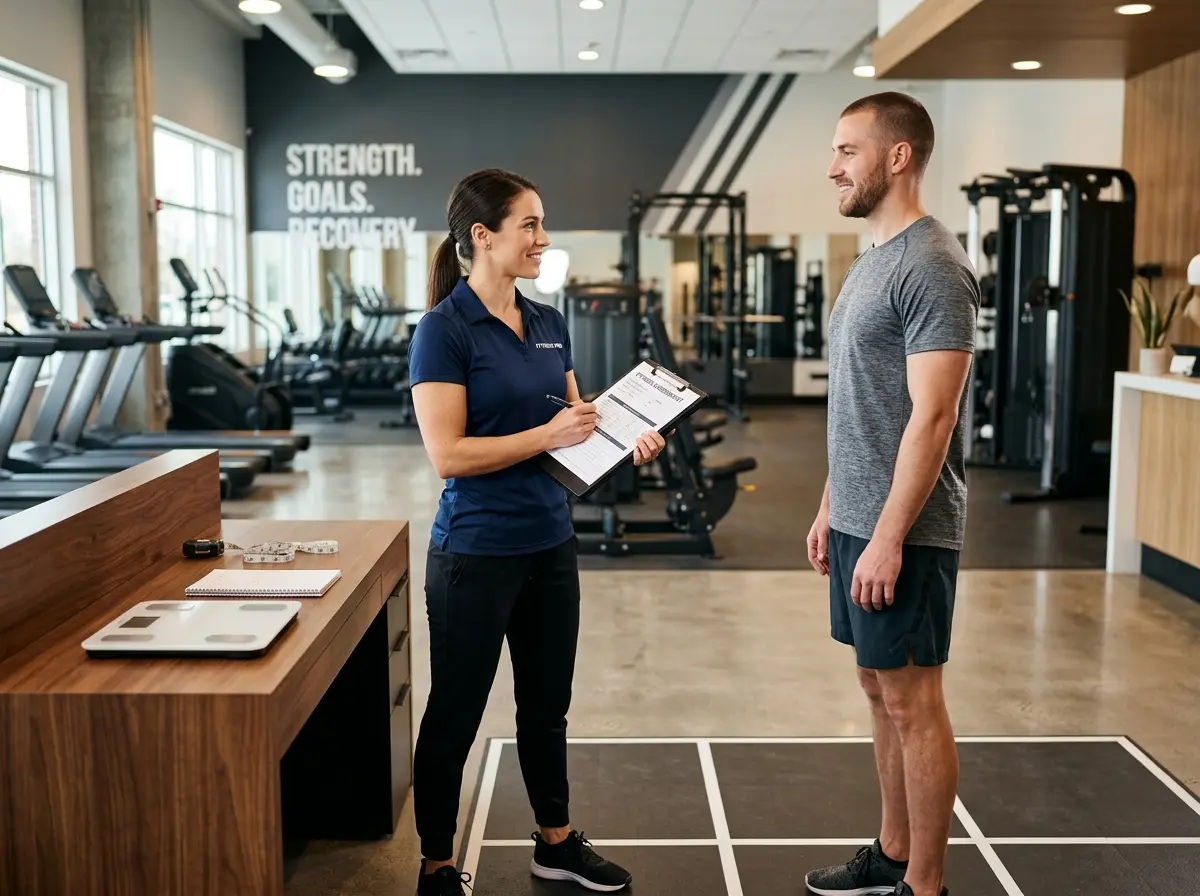
A solid new member assessment doesn't require a medical degree or a laboratory. It does require a consistent, documented process. At minimum, your assessment should include a PAR-Q (Physical Activity Readiness Questionnaire), which screens for conditions that might require a physician's clearance before exercise. This is a standard tool that takes five minutes to complete and is widely recognized in the fitness industry.
Beyond the PAR-Q, consider including resting heart rate and blood pressure measurements, a basic body composition assessment, a posture and movement screen (watching someone perform a squat, a hinge, and an overhead press tells you an enormous amount), and a goal-setting conversation. That last piece — the conversation — is often the most valuable. Understanding whether someone wants to lose 20 pounds, train for a marathon, or simply be able to carry their groceries without their back hurting shapes every recommendation you'll make afterward.
Standardizing the Process Across Your Staff
One of the most common failure points in gym assessments is inconsistency. One trainer conducts a thorough, well-documented 45-minute assessment. Another does a five-minute walkthrough and calls it done. The member experience varies wildly, and your liability protection varies right along with it.
Build a standardized assessment protocol and train every staff member on it. Create a simple form — digital is better than paper — that every new member completes before their first workout. Set a policy that no new member begins unsupervised training until their assessment is on file. Then actually enforce it. Consistency isn't just good for the member experience; it's the foundation of a defensible business practice.
Turning Assessment Data Into Ongoing Member Success
The assessment shouldn't live in a folder and never be touched again. Use it. Schedule a 30-day check-in to reassess key metrics and celebrate progress. Reference the initial goals when recommending classes, programs, or personal training packages. When members see that your staff remembers what they came in to achieve — and can show them measurable movement toward that goal — you've created something most gyms never manage to deliver: a genuinely personalized experience at scale.
Consider building a simple follow-up cadence into your onboarding workflow. A message at day 7 checking in. A reassessment invitation at day 30. A milestone acknowledgment at day 90. These touchpoints cost very little and have an outsized impact on retention. Members who feel supported don't cancel.
Quick Reminder About Stella
Stella is an AI robot employee and phone receptionist designed for businesses like yours — she greets customers in person at your location, answers phone calls around the clock, collects intake information, manages a built-in CRM, and keeps your front-of-house running smoothly without breaks, bad days, or turnover. For just $99/month with no upfront hardware costs, she's the kind of reliable, professional presence that lets your human staff focus on delivering an excellent member experience instead of fielding repetitive questions at the front desk.
Build the Onboarding Your Members Deserve — Starting Today
If your gym's current new member onboarding is essentially "here's how the locker room works, good luck," it's time for an upgrade. A formal physical assessment isn't bureaucratic overhead — it's the foundation of everything good that follows. It reduces liability, improves retention, creates upsell opportunities that feel genuinely helpful, and sends a clear message to every new member: we take your health seriously, and we're going to help you succeed here.
Your action steps are concrete. First, review your current onboarding process honestly and identify where the assessment currently lives (or doesn't). Second, adopt or build a standardized assessment protocol that includes a PAR-Q, basic biometric measurements, a movement screen, and a goal-setting conversation. Third, train your entire staff on the protocol and enforce consistency. Fourth, build a follow-up cadence that keeps assessment data alive and relevant throughout the member relationship.
The gyms that win long-term aren't necessarily the ones with the fanciest equipment or the lowest monthly price. They're the ones that make members feel genuinely supported from the very first interaction. A formal physical assessment is one of the simplest, highest-leverage ways to do exactly that — and there's no good reason to wait until January to start doing it right.