Introduction: The Silent Membership Killer You're Probably Ignoring
You've invested in top-of-the-line equipment. Your trainers are certified, motivated, and genuinely likable. Your facility is clean — impressively so. And yet, members are quietly canceling, prospects are going dark after their first inquiry, and your competitor down the street somehow keeps growing. What gives?
Here's a hint: it's probably not your squat racks.
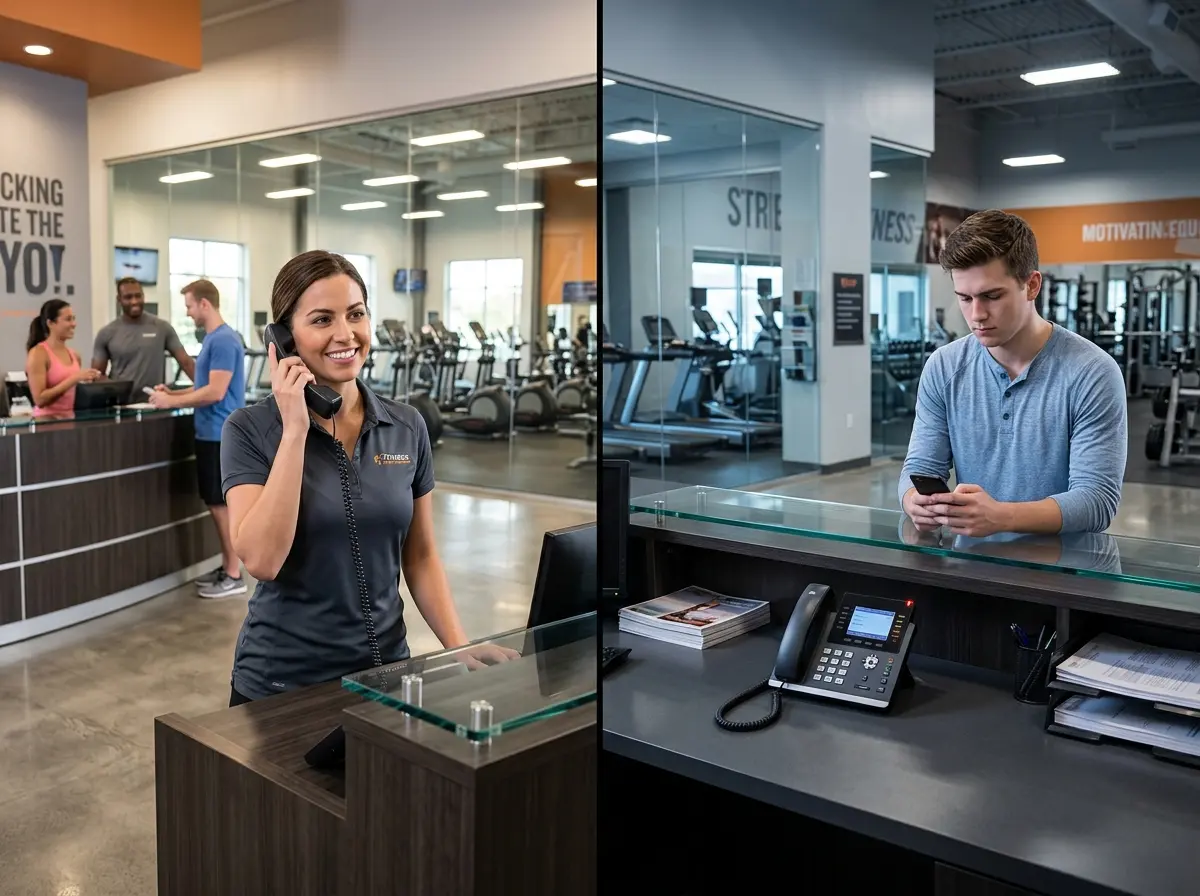
The uncomfortable truth is that for many gyms, the biggest membership leak isn't the equipment, the classes, or even the parking situation everyone complains about. It's the phone. More specifically, it's what happens — or more accurately, what doesn't happen — when someone calls your gym. Missed calls, rushed answers, hold music that sounds like it was recorded in 1987, and staff too busy counting reps to remember to check voicemails. These seemingly small friction points add up fast, and in a market where your potential members have options, a bad first impression over the phone can send them straight to your competitor's sign-up page.
The good news? This is one of the most fixable problems in your business. Let's break down exactly how your gym's phone habits might be sabotaging your growth — and what to do about it.
The Real Cost of Missed Calls and Poor Phone Etiquette
Every Missed Call Is a Missed Membership
Consider this: studies suggest that 62% of calls to small businesses go unanswered. For a gym, that's not just a missed conversation — that's a missed membership, a missed personal training package, and potentially a missed long-term relationship worth hundreds or even thousands of dollars over time. The person calling your gym in the middle of a Tuesday afternoon isn't always going to call back. More often than not, they'll just Google the next gym on the list and try them instead.
And here's the part that stings: they were already interested. They picked up the phone. That's a warm lead — arguably the best kind — and it evaporated before anyone even said hello. No amount of Instagram content or promotional email blasts can fully compensate for the simple act of answering the phone when someone is ready to buy.
The "We'll Call You Back" Trap
Voicemails aren't much better if they sit unreviewed for hours — or days. Gym staff are busy people. They're managing classes, handling equipment issues, keeping the smoothie bar stocked, and somehow also supposed to be your front-line sales team. When a voicemail comes in at 7 PM on a Friday, the chances of a prompt, professional callback are... let's say optimistic at best.
By the time someone on your team does follow up, the prospective member has already toured the competing gym, signed the contract, and is currently taking a selfie in their new locker. Timing matters enormously in sales, and in the fitness industry, impulse and motivation are powerful forces. Strike while the iron is hot — or don't strike at all.
First Impressions Are Set in Seconds
When someone does get through, the quality of that interaction matters just as much as the speed. A distracted staff member who doesn't know current promotion details, fumbles questions about class schedules, or puts someone on hold for four minutes to "go check" something is doing real brand damage. Prospects are evaluating your gym from the very first moment of contact, and a disorganized phone experience signals a disorganized operation — whether that's fair or not.
The bar isn't even that high. People just want to feel like they called a professional business that has its act together. Clearing that bar consistently is harder than it sounds when you're relying on tired humans juggling eight other tasks.
How Smarter Phone Systems Can Close the Gap
Automating the First Line of Response Without Losing the Human Touch
This is exactly the kind of problem that Stella was built to solve. Stella is an AI robot employee and phone receptionist that answers calls 24/7 with accurate, consistent information about your gym — membership options, class schedules, pricing, current promotions, guest policies, and more. She never puts anyone on hold to go ask someone else. She doesn't have an off day. And she definitely doesn't sound annoyed when someone asks the same question for the fifth time that afternoon.
For gyms with a physical location, Stella also works as a friendly in-store kiosk presence, greeting members and visitors as they walk in and proactively engaging them about current deals and offerings. On the phone side, she can handle inquiries herself, forward calls to human staff based on rules you configure, or take voicemails with AI-generated summaries pushed directly to your managers — so nothing slips through the cracks at 9 PM on a Saturday. Her built-in CRM and conversational intake forms also mean that prospect information gets captured properly from the first call, giving your sales team something useful to work with instead of a half-legible sticky note on the front desk.
Phone Habits That Are Actively Costing You Members
No After-Hours Coverage Whatsoever
Your gym is probably open early mornings and late evenings, but your phone coverage almost certainly isn't. Most people research and inquire about gym memberships outside of peak business hours — during their lunch break, after work, or late at night when they've just finished a workout and are feeling motivated. If your phone goes to a generic voicemail box after 6 PM, you are handing those leads to whoever is available to answer them.
After-hours coverage doesn't require hiring a night shift receptionist. It requires a system that can intelligently handle inquiries, answer common questions, and capture contact information so your team can follow up strategically the next morning. The technology exists, it's affordable, and there's really no good excuse in today's market not to use it.
Inconsistent Information Across Staff Members
Ask three different staff members at your gym about your current membership promotions and there's a reasonable chance you'll get three different answers. This isn't a dig at your team — it's just the reality of running a business where information changes frequently and communication isn't always airtight. But from a prospect's perspective, inconsistency reads as unprofessionalism, and unprofessionalism breeds hesitation.
The fix is twofold: tighten up internal communication around pricing and promotions, and implement systems that ensure a consistent, accurate experience regardless of who — or what — is handling the call. Consistency builds trust, and trust converts prospects into members.
Treating Phone Calls as Interruptions Instead of Opportunities
Perhaps the most damaging habit of all is the cultural one: when your front desk staff subtly treats incoming calls as interruptions to their "real" work, it shows. It shows in the tone of voice, the clipped answers, the barely-concealed impatience. Prospects pick up on it immediately, and it leaves them with a nagging feeling that this gym isn't quite the welcoming, professional environment they were hoping for.
Every inbound call is a sales opportunity. Reframing it that way — and backing that reframe with systems and training that make it easy for staff to shine when they do take calls — is a cultural shift worth making. When your team isn't bogged down answering the same routine questions all day, they have more bandwidth to give genuine, engaged attention to the calls that really need a human touch.
Quick Reminder About Stella
Stella is an AI robot employee and phone receptionist that works 24/7, greets customers at your physical location, answers calls with consistent business knowledge, and never takes a sick day. At just $99/month with no upfront hardware costs, she's designed to be an accessible, professional solution for businesses of any size looking to close the communication gaps that cost them customers.
Conclusion: It's Time to Pick Up the Phone — Or Let Someone Else Do It
The fitness industry is competitive, and the margins on customer acquisition are tighter than ever. You've worked hard to build a great gym, and the last thing you want is to lose prospective members because of something as preventable as a missed call or a clunky phone experience. The good news is that solving this problem doesn't require a massive overhaul — it requires acknowledging it exists and taking a few deliberate steps.
Here's where to start:
- Audit your current phone experience. Call your own gym at different times of day and evening. How many times does it ring? What does the voicemail say? How quickly does someone call back? Be honest about what you find.
- Identify your coverage gaps. Map out when calls are most likely to go unanswered and prioritize those windows for improvement.
- Standardize your information. Make sure every staff member — and every system — is working from the same accurate, up-to-date information about your offerings and promotions.
- Implement a system that works around the clock. Whether that's an AI receptionist, a structured callback protocol, or both, make sure no warm lead goes cold because no one was available to say hello.
Your gym deserves a front door — physical and digital — that matches the quality of everything you've built inside it. Start with the phone. The memberships will follow.