When "Table Seven Wants the Salmon" Turns Into a Three-Alarm Kitchen Fire
Picture this: It's Friday night. Every table is full, the bar is three deep, and your kitchen is running at full tilt. Then it happens — a ticket comes in with a modifier that nobody can read, a dish goes to the wrong table, and suddenly your head chef is giving you a look that could curdle hollandaise. Sound familiar?
Ticket errors during rush hour are one of the most expensive and avoidable problems in the restaurant industry. According to the National Restaurant Association, food waste and remade dishes due to order errors can account for up to 4% of total food costs — and that's before you factor in the labor, the table wait times, and the one-star Yelp review you're definitely getting tomorrow morning. Yet many restaurant owners still rely on a patchwork of shouted orders, handwritten tickets, and good intentions to keep the kitchen humming.
The fix isn't glamorous, but it works: a formal kitchen communication system. This means standardized processes, clear handoff protocols, and technology that keeps everyone on the same page — even when the printer is jammed and someone just called in sick. Let's break down exactly how to build one.
The Real Cost of Kitchen Communication Breakdowns
It's Not Just a Wrong Order — It's a Ripple Effect
When a ticket error hits during rush hour, the damage doesn't stop at the plate. A remade dish means your line cooks are now running behind on three other tables. The server has to go back and apologize — twice. The customer who ordered the wrong dish is sitting there watching their friends eat, growing quietly furious. And your kitchen's carefully choreographed tempo? Completely derailed.
Studies suggest that the average cost to remake a single dish — including food, labor, and the opportunity cost of slowing down the line — can range from $8 to $25 per incident. Multiply that across a busy Friday and Saturday service, and you're looking at a meaningful monthly loss that doesn't show up as a single line item anywhere in your P&L. It just quietly drains you.
The Most Common Communication Culprits
Before you can fix the problem, you need to name it. The most frequent offenders in kitchen miscommunication include:
- Illegible handwritten tickets — your servers are not calligraphers, and that's okay, but someone needs to know what "no onins" means.
- Verbal-only order relays — "Tell the kitchen table six wants theirs medium-rare" is a game of telephone that always ends badly.
- Modifier overload — when every order has five customizations and there's no standardized shorthand, chaos is inevitable.
- Unclear station ownership — if nobody knows whose job it is to call out a ticket, it's everyone's job, which means it's nobody's job.
- Inconsistent expo communication — the expediter is the nerve center of your kitchen, and without clear protocols, they're guessing.
Why Rush Hour Amplifies Everything
The dirty secret of kitchen communication problems is that they don't appear during a slow Tuesday lunch — they hide there. It's when volume doubles and the margin for error shrinks to zero that your weak systems become glaringly obvious. Rush hour is essentially a stress test your kitchen runs on you every weekend, whether you asked for it or not. If your communication system only works when things are calm, it isn't really a system. It's just luck.
Building a Formal Kitchen Communication System That Actually Holds Up
Standardize Your Ticket Language and Modifier Codes
The first and most impactful step is creating a universal shorthand that every front-of-house and back-of-house staff member learns during onboarding. This means documented abbreviations for every common modifier — NO O for no onions, MR for medium-rare, GF for gluten-free — printed and posted at every POS terminal and ticket printer. When the language is consistent, even a rushed, slightly chaotic ticket can be read at a glance.
Beyond abbreviations, standardize the layout of your tickets. Modifiers should always appear in the same position relative to the item. Allergy flags should be bolded or highlighted automatically in your POS system. The more visual uniformity you build in, the less cognitive load you're putting on a line cook who's already juggling four pans.
Implement a Clear Expo Protocol
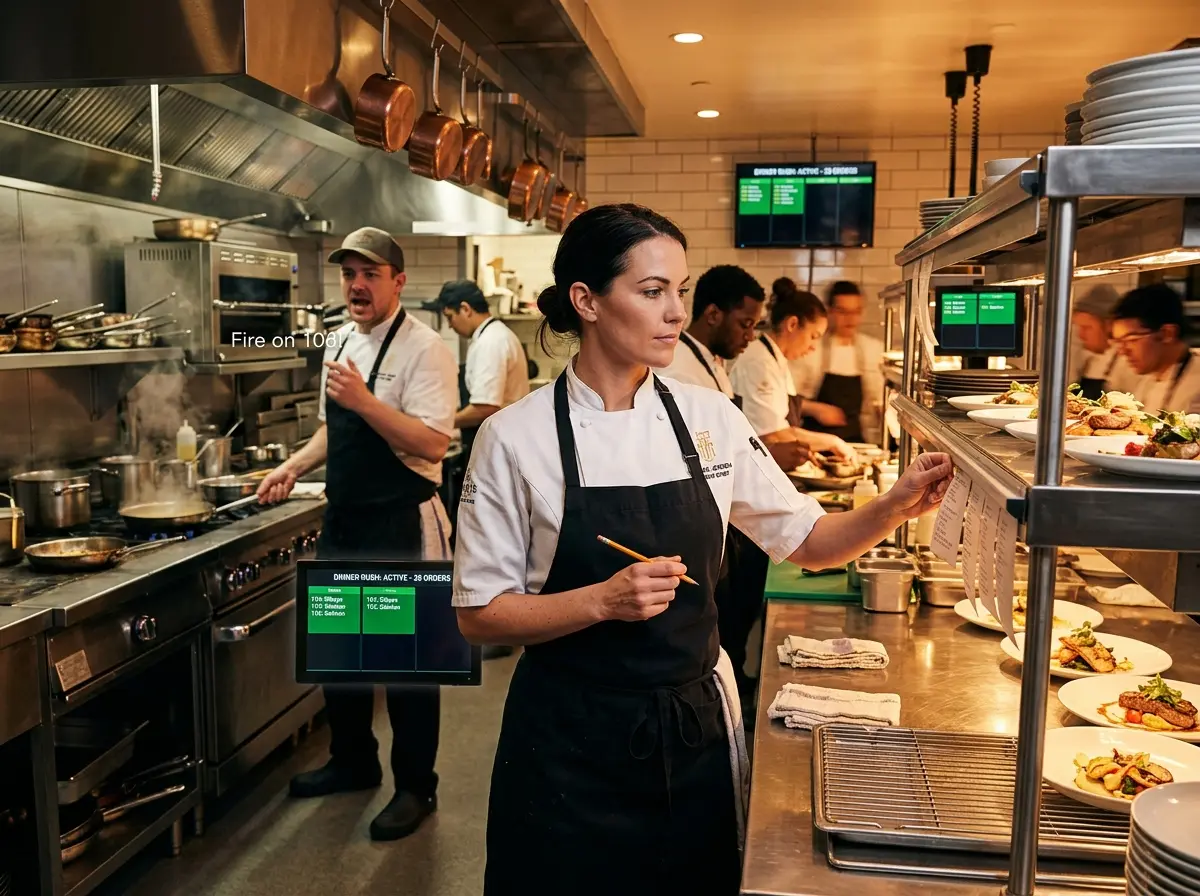
Your expediter is the most important communication node in your kitchen, and yet many restaurants give this role to whoever seems free at the moment. That's a recipe for disaster — pun fully intended. Define the expo role explicitly: this person reads every ticket aloud when it fires, confirms with each station when their component is ready, and is the single point of contact between the kitchen and the floor during service.
Establish a call-and-response culture. When the expo calls a ticket, stations confirm with a verbal acknowledgment — not a nod, not a thumbs-up from across the kitchen, a clear audible response. It sounds like military protocol because, honestly, it kind of is. Your kitchen during a Saturday dinner rush is a high-stakes, time-sensitive operation, and communication failures have real consequences.
Leverage Your POS System Fully — and Consider a KDS
If you're still printing paper tickets as your primary kitchen display method, a Kitchen Display System (KDS) is worth serious consideration. A KDS shows tickets digitally at each station, highlights priority items, tracks ticket times in real time, and eliminates the pile of curled paper that inevitably accumulates next to the hot window. Many modern POS systems integrate directly with KDS screens, and the investment typically pays for itself within a few months of reduced errors and reprints.
Even if a full KDS isn't in the budget right now, make sure you're using every feature your current POS offers. Most systems have built-in modifier highlighting, allergy flags, and course-firing options that go completely unused. Spend an afternoon with your POS documentation — or call your rep — and you might find you already have tools you're not using.
How Technology Can Take Some Pressure Off Your Front-of-House Team
Reducing the Noise Before It Reaches the Kitchen
A significant portion of kitchen ticket errors don't start in the kitchen — they start at the host stand or on the phone. When your front-of-house staff is overwhelmed with walk-ins, reservation questions, and calls about the daily special, mistakes happen before the order is even placed. Anything you can do to reduce that cognitive overload pays dividends all the way back to the line.
This is where Stella, the AI robot employee and phone receptionist, can genuinely help. Stella handles incoming phone calls 24/7 — answering questions about hours, menu specials, reservations, and policies — so your host and front-of-house staff aren't pulled away from guests to answer the same five questions for the hundredth time that week. She also stands as a physical kiosk presence inside your restaurant, greeting customers and fielding questions proactively, which means your team can stay focused on the floor instead of playing information desk. Less distraction at the front means cleaner handoffs to the kitchen.
Training, Culture, and Making It Stick
Communication Systems Only Work If Everyone Buys In
You can design the most elegant kitchen communication protocol in the industry, laminate it, and post it on every wall — and it will still fail if your staff doesn't believe in it. Culture eats process for breakfast, and if your veteran line cooks think the new ticket system is unnecessary bureaucracy, they'll route around it the moment things get busy.
The key is involving your team in the design process. Run a post-shift debrief after a rough service and ask the kitchen directly: where did communication break down tonight? What would have helped? When staff members help build the system, they take ownership of it. You'll also surface practical insights that you'd never catch from the manager's vantage point.
Build In Regular Audits and Pre-Service Briefings
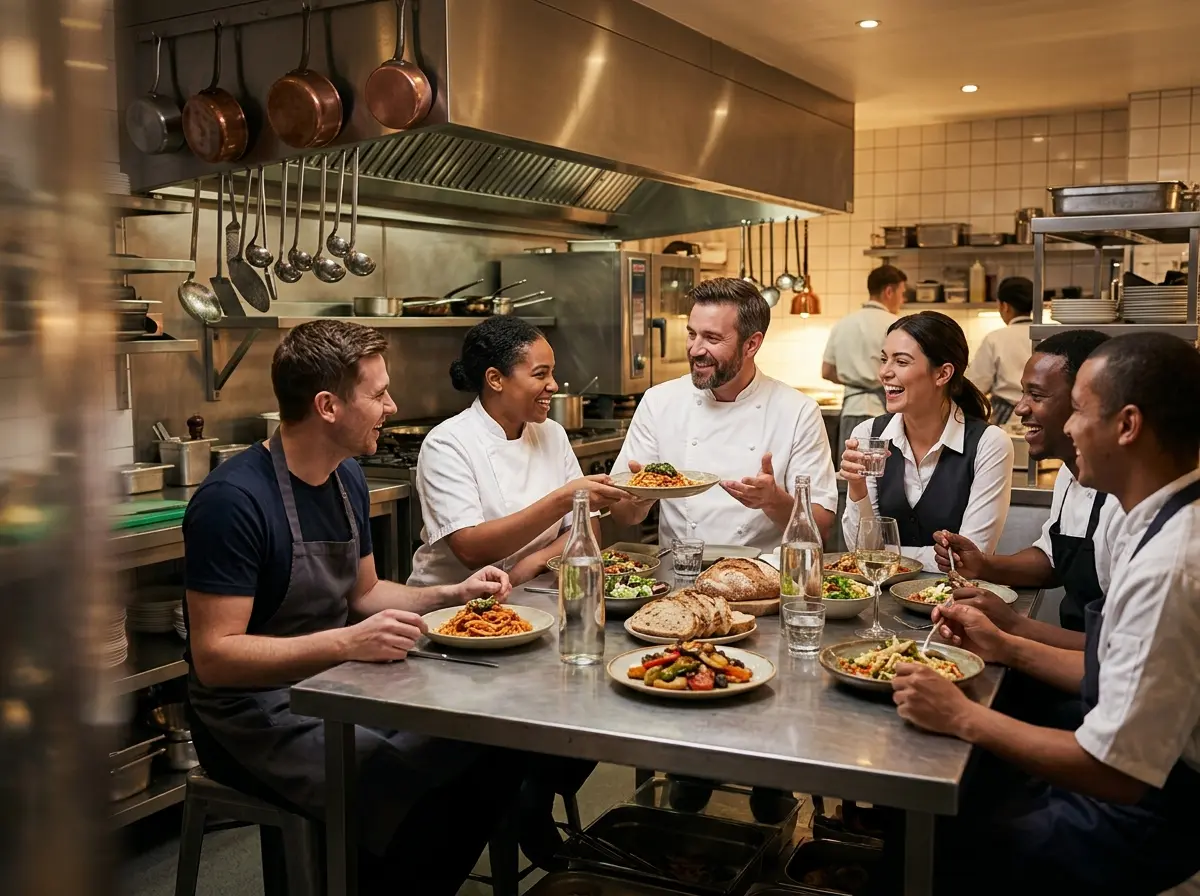
A strong pre-service meeting — even five minutes — before every dinner rush dramatically reduces errors. This is the moment to flag 86'd items, review any large party tickets, confirm station assignments, and make sure everyone knows the specials. It sounds basic because it is basic, and yet it's skipped constantly in favor of "we know the drill."
Beyond daily briefings, schedule a monthly review of your ticket error rate. Most POS systems can pull reports on voided items and remade dishes. Track these numbers over time, set a target reduction goal, and celebrate when the team hits it. What gets measured gets managed, and what gets celebrated gets repeated.
Cross-Train for Coverage Without Communication Gaps
One of the most underrated sources of ticket errors is the coverage gap — the moment when the person who knows the communication system is on break and their replacement isn't fully up to speed. Cross-training isn't just about flexibility in scheduling; it's about ensuring your communication protocols are embedded across your entire team, not just your most experienced staff. Every person who touches a ticket, calls a dish, or fires a course should be able to operate within your system fluently, on a busy Saturday, without supervision.
A Quick Note on Stella
Stella is an AI robot employee and phone receptionist built for businesses of all sizes — including restaurants. She greets customers in person as a physical kiosk, answers phone calls around the clock, promotes specials, and handles the routine questions that constantly pull your staff away from more important work. At $99/month with no upfront hardware costs, she's a practical addition for any restaurant owner looking to run a tighter, less chaotic operation.
Fixing Rush Hour Starts Before Rush Hour
The restaurants that handle peak service with grace aren't operating on talent alone — they're operating on systems. A formal kitchen communication protocol isn't a sign that your team isn't capable; it's a sign that you respect their time, their sanity, and your customers' experience enough to take the guesswork out of a high-pressure environment.
Here's your actionable starting point:
- Audit your last month of voids and remakes in your POS system to identify your most frequent error types.
- Create a standardized modifier shorthand with input from both FOH and BOH staff, document it, and post it everywhere.
- Define your expo role formally — responsibilities, call-and-response protocols, and who fills it on every shift.
- Implement a mandatory pre-service briefing, even if it's just five minutes before dinner service.
- Evaluate your KDS options if you're still on paper tickets, or audit your current POS for underused features.
- Track your error rate monthly and build in accountability and recognition around improvement.
Your kitchen is capable of running beautifully. It just needs a communication system worthy of the team inside it. Start building that system this week — your line cooks, your servers, and your profit margins will all thank you.