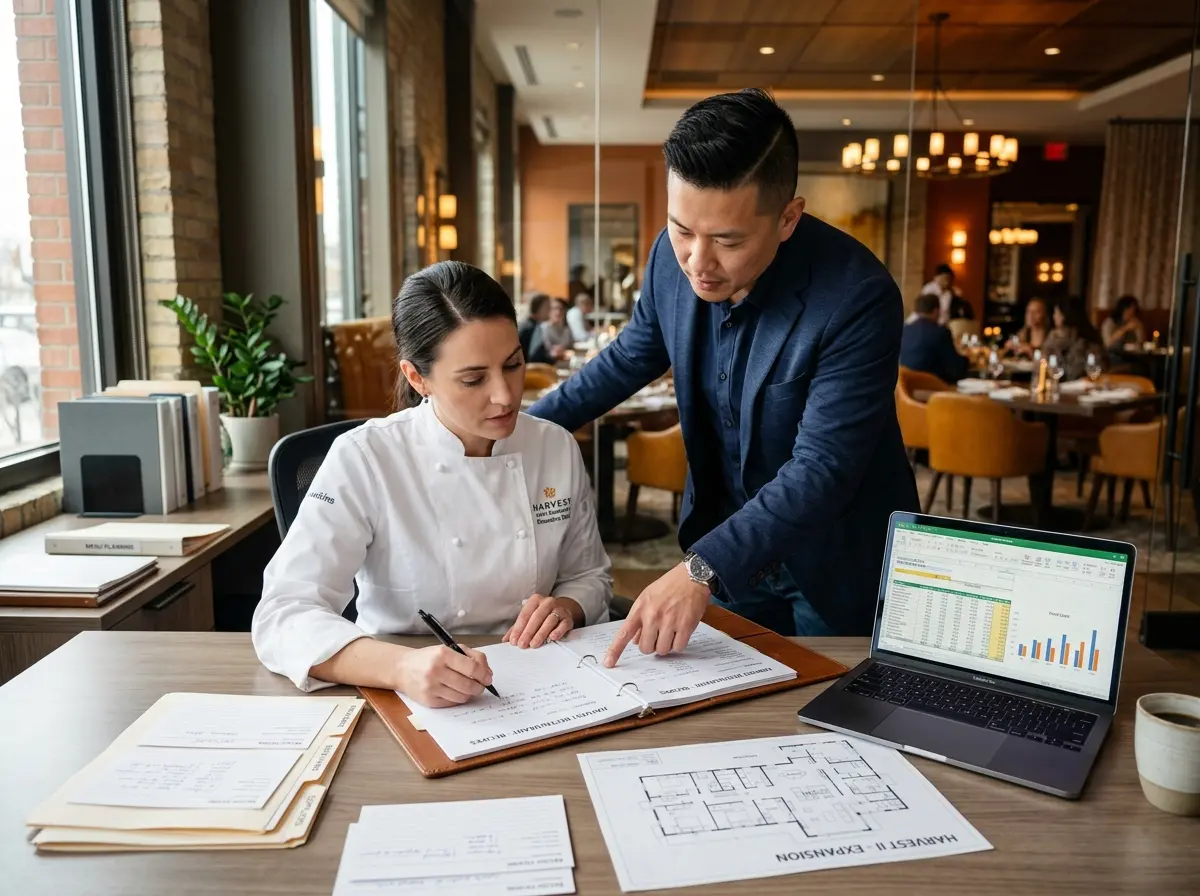
So You Want to Open a Second Location — How Exciting (and Terrifying)
Congratulations! Business is booming, the regulars love you, and someone just told you that your signature sauce "changed their life." You've decided it's time to expand. Maybe you've already signed a lease. Maybe you're just daydreaming over a spreadsheet at 11 PM. Either way, the dream of a second location is intoxicating — right up until the moment you realize that everything that made your first restaurant great lives almost entirely inside the heads of your current staff.
Here's the uncomfortable truth: most restaurant owners who struggle with scaling don't fail because of bad food. They fail because of inconsistent food. Your loyal customers drive across town to your new location expecting the exact same experience — and what they get is a slightly-off version that tastes like a cover band trying to play the original hit. Close, but not quite. And in the restaurant business, "close" is a one-star review waiting to happen.
Before you hand over keys to a second location, you need one thing more than a great manager or a bigger budget: a formal recipe documentation process. It sounds boring. It is, a little. But it's also the difference between building a brand and building a headache.
Why Undocumented Recipes Are a Silent Business Killer
The "It's All in My Head" Problem
Every seasoned restaurateur has at least one recipe that exists nowhere except in a chef's memory, a sticky note, or — and this is real — a text message thread from 2019. Your head chef knows that the pasta sauce needs "a handful" of basil and the heat turned down "when it smells right." That's beautiful, artisanal knowledge. It is also completely useless to a new hire at your second location who has never met your head chef and wouldn't recognize the smell of "right" if it hit them in the face.
According to the National Restaurant Association, staff turnover in the restaurant industry hovers around 75% annually. That means the person carrying your recipes in their head has a three-in-four chance of walking out the door within a year. When they go, so does your consistency — and potentially your reputation.
Inconsistency Is the Enemy of Loyalty
Brand loyalty in restaurants is built on one thing: predictability. Customers don't just want good food — they want the same good food every single time. When your second location produces a dish that tastes noticeably different from your first, it doesn't just disappoint customers — it confuses them. They start to question whether the quality has dropped everywhere, not just at the new spot. One inconsistent experience plants a seed of doubt that's hard to uproot.
This isn't hypothetical. Chains like McDonald's built global empires not on culinary genius, but on the radical promise that a Quarter Pounder in Des Moines tastes exactly like a Quarter Pounder in Dubai. You don't need to be McDonald's to apply the same principle. You just need your mushroom risotto to taste like your mushroom risotto — every time, everywhere.
The Hidden Cost of Winging It
Beyond customer satisfaction, undocumented recipes cost you money in ways that are easy to miss. Without standardized measurements, portion sizes drift. Without documented cooking times and temperatures, food waste increases. Without ingredient specifications, your purchasing manager at the new location might buy a cheaper substitute that subtly ruins the dish. These aren't dramatic failures — they're slow leaks that drain profitability and quality simultaneously.
Building a Recipe Documentation System That Actually Works
What a Proper Recipe Document Looks Like
A professional recipe document goes well beyond "ingredients and instructions." For each menu item, your documentation should include the full ingredient list with precise measurements by weight (not volume where possible), specific brand or supplier names for key ingredients, prep steps with photos or short video clips, cooking temperatures and times verified with a thermometer rather than intuition, plating standards with reference photos, and yield information so your team knows exactly how many portions a batch produces.
Yes, this takes time. No, you cannot skip it. Think of it as writing an owner's manual for your most valuable asset — your food.
Creating a Scalable Documentation Workflow
The best time to document your recipes was when you opened. The second best time is right now, before you sign that lease. Designate a documentation day — ideally with your head chef and a team member who will help train staff at the new location. Cook each dish from scratch while someone records, photographs, and writes down every step in real time. Use a shared digital platform like Google Drive, Notion, or a dedicated recipe management tool like Recipe Costing or ChefTec so that documents are accessible, searchable, and updateable from anywhere.
Build in a version control system so you always know which recipe is current. If you update a dish seasonally, archive the old version rather than deleting it. Your future self will thank you.
How Technology Can Support Your Expansion — Including a Word About Stella
Let the Right Tools Carry the Load
Scaling a restaurant isn't just a culinary challenge — it's an operational one. The more locations you manage, the more you need systems that work without you standing over them. Recipe documentation is one piece of the puzzle; customer communication, staff coordination, and consistent guest experiences are others. This is where smart technology investments start to pay for themselves.
Stella, the AI robot employee and phone receptionist, is one tool worth knowing about for restaurant owners in growth mode. At your physical locations, Stella stands inside the restaurant and proactively engages customers — greeting walk-ins, answering questions about the menu, promoting daily specials, and handling the front-of-house interactions that eat up your staff's time during a rush. On the phone side, she answers calls 24/7, fields questions about hours and reservations, and handles voicemails with AI-generated summaries pushed directly to your managers. As you scale, having a consistent, always-on presence at each location means your guest experience stays sharp even when your attention is split across two buildings.
Preparing Your Team and Systems for a Second Location
Training Is Documentation's Best Friend
Documentation without training is just paper. Once your recipe library is built, create a structured onboarding program for kitchen staff at the new location that uses those documents as the literal curriculum. New hires should cook each dish using the documented recipe and have it evaluated against the original before they ever serve a paying customer. This isn't micromanagement — it's quality assurance, and it's the same process used by every successful restaurant group that has scaled beyond one location.
Consider designating a "master trainer" from your original location — someone who has cooked these dishes hundreds of times and can spot when something is off before it hits the pass. Send them to the new location for the first few weeks of operation. Their presence alone is worth more than any binder of paperwork, but only because the binder already exists to back them up.
Building a Culture of Documentation Before You Need It
The restaurants that scale most gracefully are the ones that treated documentation as a cultural norm long before expansion was on the table. When your team understands that writing things down isn't bureaucratic busywork but rather the foundation of quality and growth, they become active participants in maintaining standards rather than passive recipients of top-down rules.
Start small if the full overhaul feels overwhelming. Document your top five best-selling dishes this week. Then do five more next week. Within a month, you'll have the core of a recipe library — and you'll have shifted the culture in your kitchen without turning it into a big dramatic initiative.
Planning for Menu Evolution Across Locations
One often-overlooked aspect of multi-location restaurant management is what happens when the menu changes. A seasonal update, a new dish, or a recipe tweak at location one needs to be communicated clearly and quickly to location two. Without a formal documentation system in place, these updates get lost in group chats or half-remembered briefings. With it, you update the master document, notify both locations, and ensure the change rolls out consistently. Simple — but only if the infrastructure already exists.
A Quick Reminder About Stella
Stella is an AI robot employee and phone receptionist built for businesses of all sizes — including growing restaurant groups. She greets customers in person at your kiosk, answers calls around the clock, promotes your specials, and keeps operations running smoothly without breaks, sick days, or turnover. At $99/month with no upfront hardware costs, she's one of the easiest ways to add a reliable, professional presence to every location you open.
The Bottom Line: Document Now, Scale Confidently Later
Opening a second restaurant location is one of the most exciting milestones a business owner can hit — but it's also one of the most humbling if you're not prepared. The good news is that the single most important thing you can do to protect your brand, your quality, and your sanity is also completely within your control: write your recipes down. Properly. Now.
Here are your actionable next steps before you sign that second lease:
- Audit your current recipe library. Identify every dish on your menu that lacks a complete, standardized written recipe.
- Schedule documentation sessions with your head chef and key kitchen staff. Film, photograph, and write down everything.
- Choose a digital platform to store and share your recipe documents across locations with version control.
- Build a training program around your documentation so new hires cook from the recipe, not from memory.
- Establish a process for menu updates that ensures changes are documented and communicated to all locations simultaneously.
Your second location has every chance of being as beloved as your first. The food is already great — now make sure it stays that way, no matter who's cooking it or where. The systems you build today are the foundation your future self is going to stand on. Make them solid.