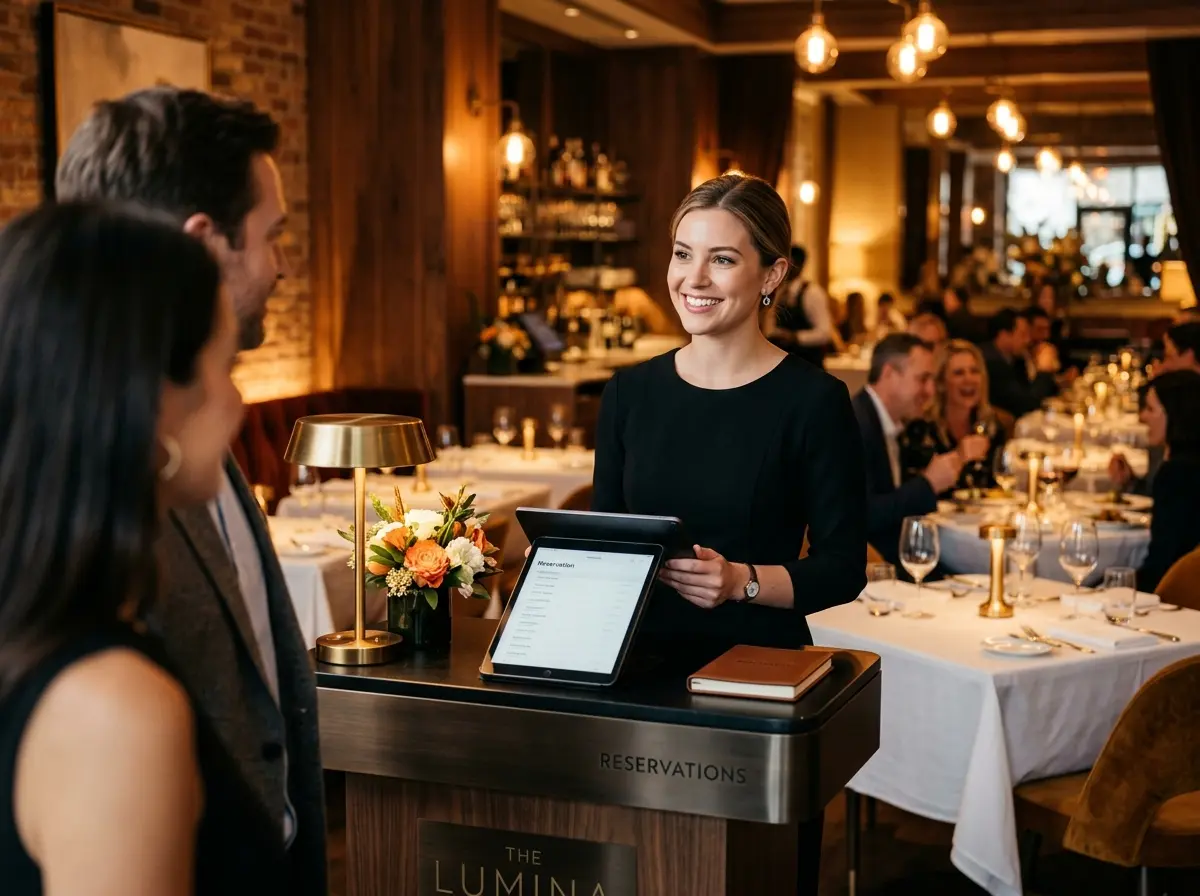
The First Impression That's Probably Being Wasted Right Now
Let's be honest: most restaurants treat the host stand like a piece of furniture. It's where the menus live, where a harried staff member occasionally glances up from a seating chart, and where guests stand awkwardly for 45 seconds wondering if anyone actually works here. Which is a shame, because that host stand — and the moment a customer walks through your door — is arguably the single most powerful touchpoint in your entire dining experience.
First impressions are not just important; they're disproportionately important. Research consistently shows that customers form opinions about a business within the first few seconds of an interaction, and those opinions are remarkably sticky. A warm, engaging welcome can set the tone for the entire meal. A cold, distracted one? Well, that's what Yelp reviews are made of.
The good news is that transforming your host stand from a forgotten furniture piece into a genuine customer experience engine doesn't require a renovation budget or a hospitality degree. It requires intention, the right tools, and — as we'll explore — possibly a very capable robot.
What Your Host Stand Is Actually Supposed to Do
More Than Just Managing a Waitlist
The traditional view of the host stand is purely logistical: take names, manage the waitlist, hand out menus, escort guests to tables. It's a traffic management system dressed in a podium. And while those functions matter, they represent only a fraction of what this prime real estate can accomplish.
Think of your host stand as the opening act of a performance. Before your guests have tasted a single bite of food or received a single refill, they've already made a judgment call about your restaurant based on how they were received. Were they greeted immediately? Did someone make eye contact? Were they told about tonight's specials before they even sat down? These small moments accumulate into a narrative that shapes how the rest of the meal is experienced — and remembered.
The host stand is also your best opportunity to set expectations, manage disappointment (long wait times sting a lot less when someone is genuinely warm about them), and begin the subtle art of upselling before a server ever arrives at the table.
The Cost of Doing It Poorly
Here's a number worth thinking about: according to various customer experience studies, it takes approximately 12 positive experiences to make up for one unresolved negative one. And a bad greeting is a negative experience, even if everything that follows is excellent. Guests who feel ignored at the door may enjoy their meal but leave with a vaguely unsatisfied feeling they can't quite articulate — which is exactly the kind of feeling that doesn't generate a glowing review or a return visit.
Then there's the staffing reality. High turnover in the restaurant industry means your host stand is often staffed by your newest, least experienced team member. There's no malice in it — it's just the way things shake out. But when the face of your restaurant is someone who started last Tuesday and isn't yet sure what the soup of the day is, that's a problem worth solving intentionally.
What a Great Host Actually Communicates
A genuinely effective host does several things simultaneously without appearing to break a sweat. They make every guest feel like an expected, welcome visitor rather than an interruption. They share relevant information — specials, wait times, seasonal menu changes — in a way that feels like a conversation, not a script. They handle complaints or friction with grace. And they do all of this while managing the flow of an entire dining room.
That's a lot to ask of one person, especially during a dinner rush. Which is why thinking creatively about how to support — or augment — that role is worth your time as a restaurant owner.
Where Technology Can Lend a Hand (or a Circuit Board)
A Smarter Welcome Experience
This is where things get interesting. Stella is an AI robot employee and phone receptionist designed to stand inside your business and engage customers naturally — greeting walk-ins, answering questions about your menu, specials, hours, and policies, and even promoting current deals. For a restaurant, this means the moment someone walks through your door, they're acknowledged warmly and given useful information, regardless of whether your host is currently seating another table or dealing with a phone call.
Stella also answers your phones 24/7 with the same knowledge she uses in person — so the guest calling at 9 PM to ask about your gluten-free options or Saturday reservation availability gets a real, informed answer instead of voicemail. She can forward calls to staff when needed or handle routine inquiries entirely on her own. It's the kind of consistent, professional presence that doesn't call in sick, doesn't have an off night, and doesn't forget to mention the weekend brunch special.
Turning the Host Stand Into a Revenue Driver
The Art of the Pre-Table Upsell
Most restaurant owners think of upselling as a server's job — and it is. But the host stand presents a golden opportunity to plant seeds before anyone sits down. Mentioning a featured cocktail while guests wait, pointing out a limited-time appetizer special, or simply noting that the chef's tasting menu has been particularly popular this week can meaningfully influence what guests order before they've even looked at a menu.
This works because it feels less like a sales pitch and more like insider knowledge. A host who says, "Just so you know, our truffle pasta is back for the season and it's been flying out of the kitchen," is doing your revenue a favor while making the guest feel like they're in the know. Train your hosts — human or otherwise — to think of every guest interaction as an opportunity to inform and excite, not just direct traffic.
Collecting Feedback and Data at the Right Moment
The host stand is also an underused data collection point. Asking guests if they have any dietary restrictions or preferences before seating them isn't just considerate — it's actionable information that can improve their experience and yours. Similarly, capturing contact information for reservations, loyalty programs, or follow-up communications is far easier and more natural at the host stand than anywhere else in the dining journey.
Think about what you could do with a system that remembered returning guests, flagged regulars, or tracked which promotions drove foot traffic. That level of insight transforms your host stand from a logistical checkpoint into a genuine business intelligence tool — and it's far more achievable than most restaurant owners realize.
Managing Wait Times Without Losing Guests
Long waits are a reality at popular restaurants. But the way you manage them makes all the difference between a guest who stays and a guest who walks across the street. Research from the hospitality industry consistently shows that guests are willing to wait significantly longer when they feel informed, acknowledged, and valued during the wait. Proactive communication — an honest estimate, a check-in midway through, a complimentary amuse-bouche if things run long — transforms frustration into patience, and patience into loyalty.
This is where a well-equipped host stand pays for itself many times over. The tools and training you invest in managing the waiting experience will retain more guests than almost any marketing campaign you could run.
Quick Reminder About Stella
Stella is a friendly, human-sized AI robot kiosk and phone receptionist available for just $99/month with no upfront hardware costs. She greets walk-in customers, promotes your specials, answers questions, and handles phone calls around the clock — so your team can focus on delivering great hospitality instead of fielding the same questions on repeat. For restaurants especially, she's a natural fit for that critical first moment of contact, whether it's at the door or on the phone.
Making the Change: Practical Steps for Restaurant Owners
Transforming your host stand doesn't require a complete overhaul of your operations. It requires a shift in mindset and a few deliberate changes to how that space is staffed, equipped, and utilized. Here's where to start:
Invest in your host role. Stop treating it as an entry-level placeholder position. Your host is the first human interaction a guest has with your restaurant. Provide real training on your menu, your brand voice, your current specials, and how to handle difficult situations. Role-play common scenarios. Make them feel like a critical member of the team — because they are.
Equip the stand properly. Whether that means a tablet with your reservation system, a display with current specials, or an AI kiosk that handles overflow engagement, your host stand should have the tools to do its job effectively. A pen and a printed seating chart won't cut it in 2024.
Define what success looks like. How long should guests wait before being greeted? What information should every guest receive before being seated? What's the protocol when the wait exceeds estimates? Write it down, train to it, and hold your team accountable. What gets measured gets managed — and what gets managed gets better.
Use the data you collect. If you're capturing guest information through reservations, waitlists, or loyalty programs, actually use it. Know who your regulars are. Recognize them. Make them feel seen. That kind of personalization is what turns occasional diners into devoted advocates for your restaurant.
The host stand has been hiding in plain sight for too long. It's time to treat it like the powerful customer experience tool it was always meant to be — because your guests are forming opinions the moment they walk through the door, whether you're ready for them or not.