Introduction: The Art of Getting Members to Upgrade (Without Feeling Like a Used Car Salesman)
Let's be honest — you didn't open a gym to spend your days chasing down members and convincing them to spend more money. And yet, here you are, watching a sea of basic plan members swipe in every day, use your premium equipment, drink your complimentary water, and walk right back out without ever considering the upgrade that would actually transform their fitness journey. And your bottom line.
The good news? You don't have to corner anyone near the squat rack to make upselling work. Moving members from basic to premium plans is less about aggressive sales tactics and more about delivering value so clearly that upgrading feels like the obvious next step. According to industry research, acquiring a new customer costs five to seven times more than retaining — and upselling — an existing one. That means your current basic members are a goldmine sitting right in front of you.
The even better news is that with the right strategy, the right timing, and the right tools, you can create a membership upgrade journey that feels natural, helpful, and even welcomed by your members. So let's talk about how to actually do it.
Understanding Your Members Before You Pitch Them Anything
Know What They Actually Want
Before you can sell an upgrade, you need to understand why someone is on a basic plan in the first place. Some members chose basic because they're budget-conscious. Others didn't fully understand what premium included. And a surprising number simply didn't know there was a premium option when they signed up — which says more about your onboarding process than their interest level.
Segment your membership base before launching any upgrade campaign. Look at check-in frequency, class attendance, facility usage patterns, and tenure. A member who visits five days a week and is already hovering around the premium amenities is a very different conversation than someone who shows up twice a month. Your pitch to each should be equally different.
Define a Premium Offer Worth Upgrading To
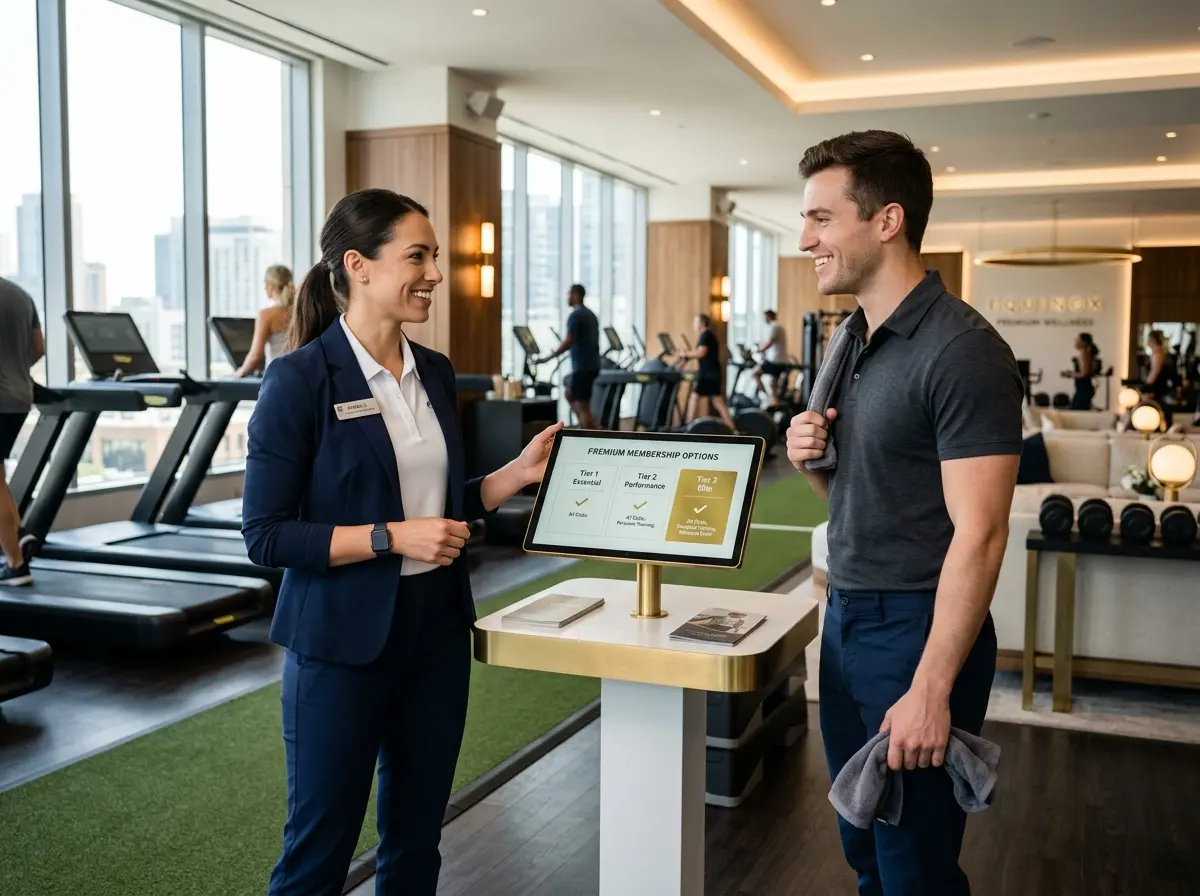
This might seem obvious, but it's worth asking plainly: is your premium plan actually premium? If the only difference between basic and premium is a free water bottle and access to one extra treadmill, you're going to have a hard time making the case. The best premium plans offer a genuinely compelling package — think personal training sessions, group fitness class access, guest passes, nutrition consultations, priority booking, locker perks, or wellness add-ons like tanning or massage.
If your current premium tier feels a little thin, now is a great time to bulk it up before you start pushing upgrades. Members are far more receptive to a pitch that makes them say "wait, I get all of that?" than one that makes them shrug and reach for their water bottle.
Time Your Outreach Strategically
Timing is everything. The worst time to pitch an upgrade is when a member is rushing out the door post-workout, sweaty and late for work. The best times tend to be during natural touchpoints: the end of a member's first month (they've settled in and know what they like), right after they've hit a personal milestone, or when a new premium feature launches. Seasonal campaigns — New Year, summer body season, fall resets — also create built-in motivation. People are already thinking about leveling up; you're just giving them a clear path to do it.
How the Right Tools Make Upselling Effortless
Let Technology Do the Heavy Lifting at the Front Desk
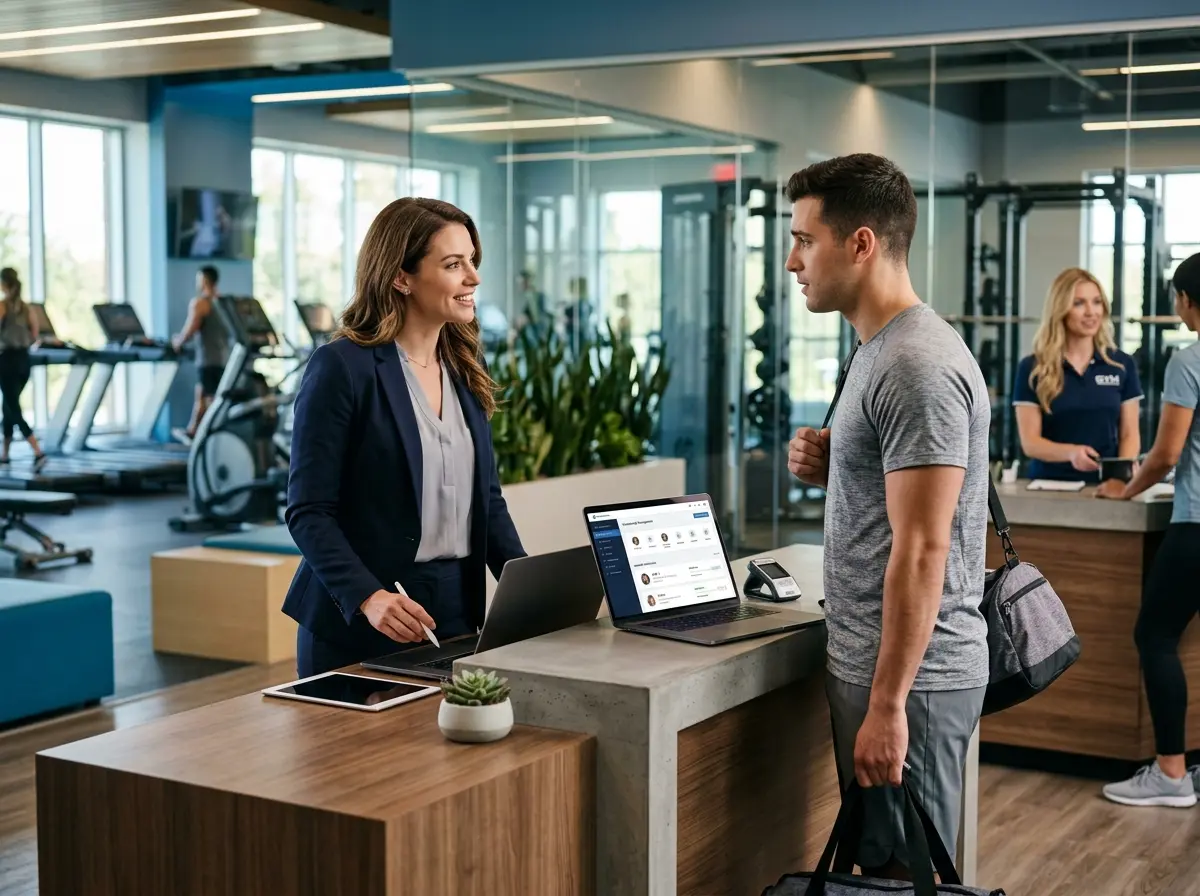
Your front desk staff is juggling check-ins, phone calls, membership questions, and the occasional complaint about parking — all before 9 AM. Expecting them to consistently and enthusiastically pitch premium upgrades to every basic member who walks through the door is, shall we say, optimistic. That's where having a dedicated presence specifically focused on member engagement makes a real difference.
Stella, the AI robot employee and phone receptionist, is built exactly for moments like this. As a friendly, human-sized kiosk that stands inside your gym, Stella proactively greets every member who walks by — not just the ones who happen to approach the desk. She can be programmed with your current promotions and premium plan details, and she'll talk through the benefits naturally, consistently, and without ever having a bad day. She can highlight what the member is missing, answer questions about the upgrade, and even collect their information through a conversational intake form if they want to learn more or sign up on the spot.
On the phone side, Stella answers calls 24/7 and handles inquiries about membership tiers, pricing, and promotions — so no lead ever goes cold because your staff was too busy to pick up. Her built-in CRM also lets you tag basic members, track their interactions, and follow up with targeted outreach. It's upselling infrastructure that actually works while you're focused on running the gym.
Crafting an Upgrade Strategy That Actually Converts
Lead with Value, Not Price
The single biggest mistake gym owners make when pitching upgrades is leading with the cost difference. "It's only $20 more a month" sounds reasonable to you, but to a member, it immediately triggers mental math and skepticism. Instead, lead entirely with what they gain. Frame the conversation around their goals — if they've mentioned wanting to lose weight, talk about how premium includes nutrition coaching. If they're competitive, mention the priority class booking that means they'll never get shut out of their favorite instructor's session again.
Once value is clearly established, price becomes context rather than an obstacle. A member who's convinced they want something will find a way to justify the cost. A member who's been handed a price before understanding the benefit won't even get that far.
Use Social Proof and Success Stories
Nothing sells a premium plan quite like seeing another member thrive on it. Collect testimonials — short quotes, before-and-after stories, brief video clips — from your happiest premium members and use them everywhere: on your website, in email campaigns, on in-gym signage, and in conversations with basic members. People trust other people far more than they trust marketing copy, and a genuine story from a real member carries enormous weight.
Consider creating a simple referral or social incentive: if a premium member refers someone who upgrades, they get a free month or a branded gym bag. You turn your happiest customers into your most effective sales team, which — let's be real — is a much more pleasant situation than cold-calling your own membership list.
Make the Upgrade Process Frictionless
You've done all the hard work of convincing someone they want to upgrade. Don't lose them at the finish line because the process is a nightmare. Upgrades should be completable in under two minutes — online, at the kiosk, or at the front desk. Offer a free trial period for premium features (one week or one month works well) so members can experience the value before committing. Remove the risk, and you remove the hesitation.
Follow up with anyone who showed interest but didn't convert within 48 hours. A simple, friendly message — "Hey, we saved your spot in Saturday's premium class if you'd like to try it out" — can be the nudge that closes the loop. Automation makes this easy; manual follow-up makes it inconsistent. Build the system and let it run.
Quick Reminder About Stella
Stella is an AI robot employee and phone receptionist that helps gyms — and businesses across virtually every industry — greet customers, promote offerings, answer questions, and handle calls 24/7, all for just $99 a month with no upfront hardware costs. Whether she's standing inside your gym engaging walk-ins about your premium plan or fielding after-hours membership inquiries over the phone, she shows up consistently so your team doesn't have to do everything at once. For gym owners serious about upselling at scale, she's worth a look.
Conclusion: Your Next Steps Toward a Premium Membership Base
Upgrading your members from basic to premium isn't about pressure or pushy sales tactics — it's about genuinely understanding what your members want, building a premium offer they can't reasonably turn down, and creating touchpoints that make the upgrade feel like a natural next step rather than a financial ambush.
Here's where to start this week:
- Audit your premium plan. Is the value gap between basic and premium compelling enough? If not, add something meaningful before you start promoting it.
- Segment your basic members. Identify your highest-frequency, most-engaged basic members first — they're your warmest upgrade prospects.
- Build one automated follow-up sequence for members who've been on basic for 30, 60, and 90 days, leading with their goals and your premium benefits.
- Reduce friction. Make sure your upgrade process takes less than two minutes and is available online, in-app, or in person.
- Collect social proof from your happiest premium members and put it where basic members will actually see it.
Done right, your upgrade strategy won't feel like a sales campaign — it'll feel like a service. And that's exactly when it works best. Your members joined because they want results. Your premium plan, when positioned correctly, is simply the fastest path to getting them there. All you have to do is show them the way.