When Your Patients Have Four Legs and Your Phone Rings at 2 AM
Picture this: It's 2:17 AM. A panicked pet owner's golden retriever just ate an entire bag of chocolate chips. They're frantically searching for help, and your clinic's phone is ringing off the hook. Meanwhile, you — a highly trained veterinary professional — are either sound asleep, elbow-deep in another emergency, or desperately trying to have one uninterrupted evening. Sound familiar?
After-hours emergency calls are one of the most persistent operational headaches in veterinary medicine. You can't ignore them (a sick animal is a sick animal, regardless of the time), but you also can't staff a full front desk team around the clock without bleeding your budget dry. It's the classic veterinary dilemma: how do you be everywhere at once when you're only one clinic?
The good news is that AI is quietly transforming how veterinary clinics handle exactly this problem — and it's more practical, affordable, and surprisingly human-feeling than most practice owners expect. Let's break down what's actually working in the field.
The Real Cost of Missed After-Hours Calls
It's Not Just Lost Revenue — It's Lost Trust
When a pet owner calls your clinic at midnight and gets a generic voicemail or an endless ring, they don't just move on with their evening. They call your competitor, leave a one-star Google review, or spend the next hour posting in a local Facebook group asking if anyone knows "a vet that actually picks up." That's not dramatic — that's Tuesday.
Studies in the veterinary industry consistently show that pet owners rank accessibility and responsiveness as top factors in choosing and staying with a veterinary clinic. A 2022 survey by the American Animal Hospital Association found that nearly 60% of pet owners would switch veterinary providers after a poor communication experience. Missing an after-hours call isn't just a minor inconvenience — it's a slow leak in your client retention bucket.
The Staffing Math Simply Doesn't Work (Without Help)
Hiring a dedicated overnight receptionist costs anywhere from $30,000 to $45,000 annually when you factor in wages, benefits, and turnover costs. And turnover in veterinary reception roles is notoriously high — the emotional weight of the job combined with odd hours creates a revolving door that many practice managers know all too well. You could outsource to an answering service, but those come with their own bag of problems: generic scripts, no real knowledge of your clinic, and a per-call billing structure that gets expensive fast.
The staffing math, in short, does not math — at least not without some kind of technological assist.
How AI Phone Systems Are Changing After-Hours Care
Smart Triage, Not Just Voicemail
Modern AI phone receptionists don't just answer and record. They engage. When a worried pet owner calls at 11 PM, an AI system can walk them through a structured intake conversation — asking about the animal's species, age, symptoms, and urgency level — and then route the call appropriately based on what it learns. Is this a "watch and wait" situation or a "get to an emergency vet now" situation? A well-configured AI can help make that determination and provide immediate guidance while ensuring the right human gets notified.
This kind of intelligent triage means your on-call veterinarian isn't being woken up because someone's cat sneezed twice. It also means genuinely urgent cases don't fall through the cracks because a caller gave up on hold music and hung up.
Consistent Information, Every Single Time
One underrated benefit of AI phone systems is their almost annoying consistency. They never have an off night. They never forget to mention that your clinic requires a deposit for emergency appointments. They never accidentally give out the wrong after-hours emergency line because they were half-asleep at the end of a long shift. Every caller gets accurate, up-to-date information about your services, emergency protocols, hours, and policies — delivered in the same friendly, professional tone regardless of whether it's 3 PM on a Tuesday or 3 AM on a holiday weekend.
For veterinary clinics with complex protocols — different procedures for existing clients versus new clients, specific referral partnerships with emergency hospitals, or seasonal hours — this consistency is genuinely valuable.
Where Stella Fits Into Your Veterinary Practice
A Receptionist Who Never Calls in Sick (Not Even on Thanksgiving)
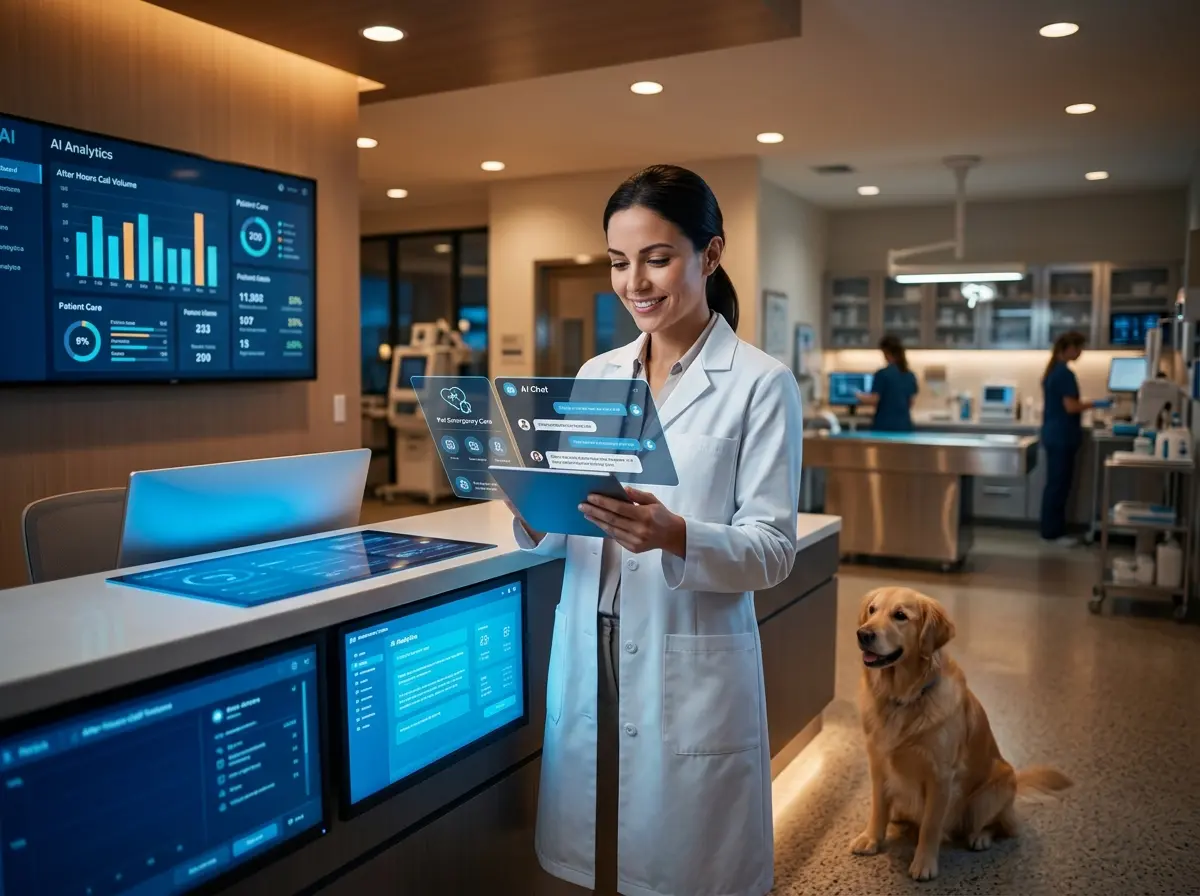
Stella is an AI robot employee and phone receptionist built for exactly this kind of challenge. For veterinary clinics, she can answer calls 24/7 with full knowledge of your services, pricing, emergency protocols, and clinic policies — handling routine inquiries completely on her own, or forwarding calls to on-call staff based on conditions you configure. A frantic call about a possible poisoning at midnight? Stella escalates it immediately. A question about vaccine pricing at 9 PM? She handles it without waking anyone up.
Beyond the phones, Stella also shines in the clinic itself as a physical kiosk presence — greeting clients in your waiting area, answering questions about services and current promotions, and reducing the constant stream of interruptions your front desk staff deal with during peak hours. Her built-in CRM captures caller and visitor information through conversational intake forms, automatically generating client profiles with notes and tags — so your team walks into every interaction already knowing who they're talking to and why they called. That kind of context is gold in a busy practice.
Building an After-Hours Strategy That Actually Works
Define Your Emergency Tiers Before You Automate Anything
Before you plug in any AI system, you need a clear internal framework for what counts as an emergency at your clinic. This sounds obvious, but many practices have never formally documented it. Work with your veterinary team to define at least three tiers: situations that require immediate escalation to an on-call vet, situations that should be directed to a partnered emergency hospital, and situations that can wait until morning with appropriate guidance. Once these tiers are defined, any AI phone system can be configured to route calls accordingly — but the clinical judgment behind the routing still needs to come from you.
Communicate Your After-Hours Protocols to Clients Proactively
One of the most effective things you can do right now — with or without AI — is make your after-hours protocol crystal clear before clients ever need it. This means including it on your website, in new client welcome packets, on appointment reminder texts, and even on a sign in your waiting room. Clients who know exactly what to do in an emergency are less likely to panic-dial 47 times and more likely to follow the process you've set up. When your AI phone system reinforces that same information consistently, it builds confidence rather than confusion.
Don't Set It and Forget It — Review Your Call Data
The beautiful, slightly nerdy thing about AI phone systems is that they generate data. Every call, every question, every escalation becomes a data point. Are you getting a spike in after-hours calls on Friday evenings? That might tell you something about your regular-hours availability. Are callers frequently asking a question your AI wasn't originally configured to handle? Update the system. Are certain promotion mentions driving inbound calls? Now you know what's working. Regularly reviewing your call summaries and interaction logs is how you turn a reactive tool into a proactive business strategy.
A Quick Reminder About Stella
Stella is an AI robot employee and phone receptionist available for just $99/month — no upfront hardware costs, no long-term contracts, and no complicated setup. She works in-person as a physical kiosk for businesses with a location, and handles phone calls 24/7 for any type of practice. For veterinary clinics managing after-hours call volume, client communications, and front desk efficiency, she's worth a serious look.
Your Next Steps Start Tonight
After-hours emergency call management isn't a problem you solve once and never think about again — it's an ongoing operational challenge that evolves as your practice grows. But the clinics that handle it well share a few things in common: they have a documented triage protocol, they use technology to extend their availability without destroying their budget, and they treat every missed call as a learning opportunity rather than a footnote.
Start by auditing your current after-hours setup honestly. How many calls are you missing? What happens to those callers? What does your voicemail actually say, and when did you last update it? Then explore what an AI phone solution could realistically handle for you — and what it would free your human team up to do instead.
Your patients can't schedule their emergencies around your office hours. But with the right systems in place, you don't have to choose between being accessible and being sustainable. That's a win for your clients, their pets, and frankly, your sleep schedule.