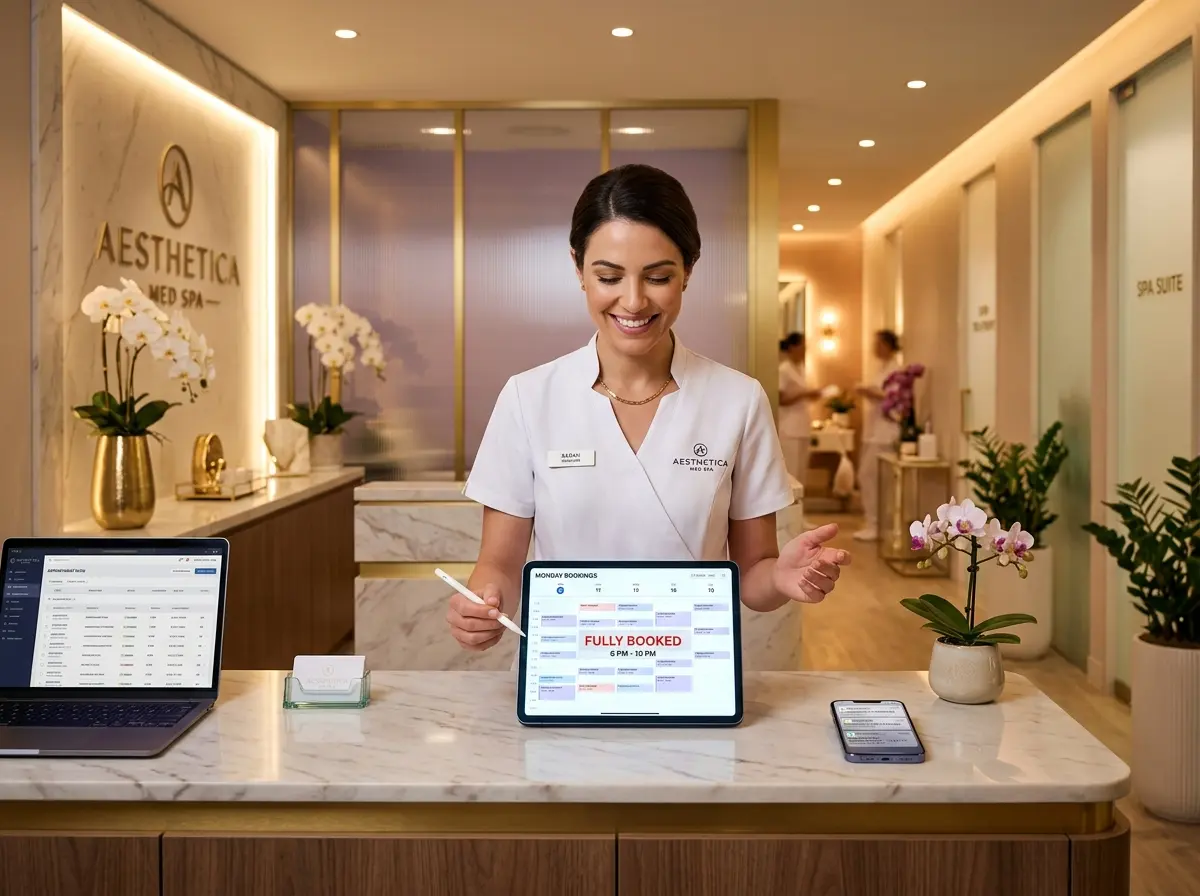
When the Phone Rings at 11 PM, Who's Answering?
Picture this: It's a Tuesday night. Your med spa is closed, your receptionist is asleep, and somewhere across town, a potential client has just finished scrolling through before-and-after photos on Instagram. She's ready to book. She's motivated. She picks up the phone and calls your spa — and gets voicemail. So she calls the competitor down the street instead.
This happens more than most business owners want to admit. According to research from Invoca, roughly 80% of callers who reach voicemail don't leave a message — they simply move on. And in an industry like medical aesthetics, where trust, responsiveness, and first impressions are everything, "we'll call you back tomorrow" is often just another way of saying "please give your money to someone else."
The good news? One forward-thinking med spa figured out how to plug that after-hours leak — and the answer didn't involve hiring a night-shift receptionist or paying overtime. It involved a smarter system that works while the team sleeps. Here's what they did, and how you can do the same.
The After-Hours Appointment Problem in Medical Aesthetics
Why Med Spas Lose Clients Before They Even Walk In the Door
The medical spa industry is booming. The global medical spa market was valued at over $16 billion in 2023 and is expected to keep climbing. That means more competition, more savvy consumers, and a much shorter window to capture someone's attention before they move on to the next option on their Google search results page.
Med spa clients are also a particular kind of consumer. They tend to research extensively, compare options carefully, and make decisions in the evenings or on weekends — precisely when your front desk is not staffed. They want answers to specific questions: How much does a HydraFacial cost? Do you offer payment plans for laser treatments? What's the difference between Botox and Dysport? If they can't get those answers quickly, you've lost them to whoever can.
The Real Cost of a Missed Call
Most med spa owners think about missed calls as a minor inconvenience. The math tells a very different story. If your average treatment package is worth $500, and you're missing even five calls per week from serious prospects, that's potentially $2,500 in lost weekly revenue — or over $130,000 per year — walking out the door because nobody picked up the phone. That's not a rounding error. That's a staffing salary, a marketing budget, or a very nice piece of equipment you could have purchased.
And that figure doesn't account for the lifetime value of a loyal med spa client, who may return for monthly treatments, refer friends, and upgrade services over time. One unanswered call can cost far more than the initial appointment it represented.
How One Med Spa Turned After-Hours Into Revenue Hours
A regional med spa with two locations noticed a pattern in their call logs: a significant volume of inbound calls were coming in between 7 PM and 10 PM on weeknights, and almost none of them were being answered. They weren't understaffed during business hours — they had a solid front desk team — but evenings were a consistent dead zone. The owners considered hiring an after-hours answering service, but the cost was high, the quality was inconsistent, and frankly, reading from a generic script about Botox isn't exactly a confidence-inspiring first impression.
Instead, they implemented an AI-powered phone receptionist that could answer calls at any hour, speak knowledgeably about their specific services, pricing, and promotions, and even collect intake information from prospective clients during the call itself. Within the first month, they captured dozens of after-hours inquiries that would have previously gone unanswered — and converted a meaningful portion of them into booked appointments. No new hires. No overtime. Just a smarter system running in the background.
How AI-Powered Reception Can Work for Your Spa
More Than a Voicemail Upgrade
There's a meaningful difference between a voicemail system and an AI receptionist. Voicemail is passive — it waits for someone to leave a message and hopes they bother. An AI receptionist is active. It answers, engages, answers questions, collects information, promotes current offers, and can even route urgent calls to the right person when truly necessary. Stella, an AI robot employee and phone receptionist built for businesses exactly like yours, does all of this at a flat $99/month — with no upfront hardware costs and no complicated setup.
For med spas specifically, Stella can be trained on your service menu, your pricing tiers, your current promotions, and your booking policies. When a potential client calls at 9:45 PM asking whether you offer microneedling with PRP, she gets a real, knowledgeable answer — not a generic "please call back during business hours." And if that caller is ready to move forward, Stella can collect their contact information through a conversational intake form right there on the call, so your team walks in the next morning with a warm lead already in the CRM, complete with an AI-generated summary of what was discussed. That's a very different kind of morning than digging through missed call notifications with no context.
Stella also works as a physical in-store kiosk presence, greeting clients as they arrive, answering questions about services, and proactively highlighting current specials — so her value doesn't stop when the phone call does.
Building a System That Books While You Sleep
Standardize Your Intake Process First
Before you can automate anything effectively, you need to know what information you actually need from a new client before their first appointment. Most med spas require some combination of contact details, service interest, health history flags, and scheduling preferences. Map that out clearly. When your intake process is well-defined, an AI system can collect that information conversationally during a phone call or through a web-based form — and your front desk team starts every interaction with a complete picture rather than starting from scratch.
Standardizing intake also reduces errors. When a human receptionist is juggling three things at once, important details get missed. A structured, AI-assisted intake process captures everything consistently, every time, and stores it in an organized CRM for your team to reference.
Train Your System on Your Actual Business
The difference between a helpful AI receptionist and an embarrassing one is specificity. Generic systems that can only answer generic questions aren't useful in an industry where clients are asking nuanced questions about specific treatments, contraindications, downtime expectations, and package pricing. Your AI phone receptionist needs to know your services, your protocols, and your current promotions — not a generic spa template.
Invest time upfront in customizing your system with detailed, accurate information about every service you offer. Think of it as training a new employee who never forgets anything and never has a bad day. The better the information you give it, the better the experience your callers will have.
Use After-Hours Data to Improve Your Daytime Operations
One often-overlooked benefit of an AI reception system is the data it generates. Every call is a window into what your clients are curious about, what objections they raise, and which promotions are generating the most interest. If your AI receptionist is fielding twenty questions a week about a service you rarely promote, that's a signal worth paying attention to. If callers keep asking about financing options you don't currently offer, that's feedback you'd never have captured with a voicemail system.
Review your call summaries and interaction data regularly. You'll find insights that would have otherwise been lost to the void — and you can use them to sharpen your marketing, refine your service offerings, and train your human staff on the questions they should expect to answer.
Quick Reminder About Stella
Stella is an AI robot employee and phone receptionist that answers calls 24/7, engages walk-in clients at a physical kiosk, collects intake information, manages a built-in CRM, and keeps your business running professionally around the clock — all for $99/month with no upfront hardware costs. She works across virtually every industry, from med spas and salons to law firms and retail shops, and she's ready to start working the moment you set her up.
Stop Leaving Revenue on the Table After 5 PM
The med spa in this story didn't find a magic marketing strategy or spend a fortune on advertising to fill their appointment book. They simply stopped letting interested clients slip away unanswered. The opportunity was already there — they just needed a system capable of capturing it.
If you're ready to stop bleeding after-hours leads, here's where to start:
- Audit your missed calls. Pull your call logs for the last 30 days and identify how many calls came in outside of business hours. If you don't have that data, start collecting it immediately.
- Map your intake process. Write out exactly what information you need from a new client before their first visit, so any system you implement can capture it consistently.
- Implement 24/7 AI reception. Deploy a phone receptionist that knows your services, answers intelligently, and captures leads while your team is off the clock.
- Review interaction data monthly. Use the insights your system generates to improve your marketing, your offerings, and your client communication strategy.
Your competitors are already losing clients after hours. The question is whether you're the one capturing those clients — or losing them right alongside everyone else. The appointment book doesn't have to go quiet at 5 PM. With the right system in place, it doesn't have to.