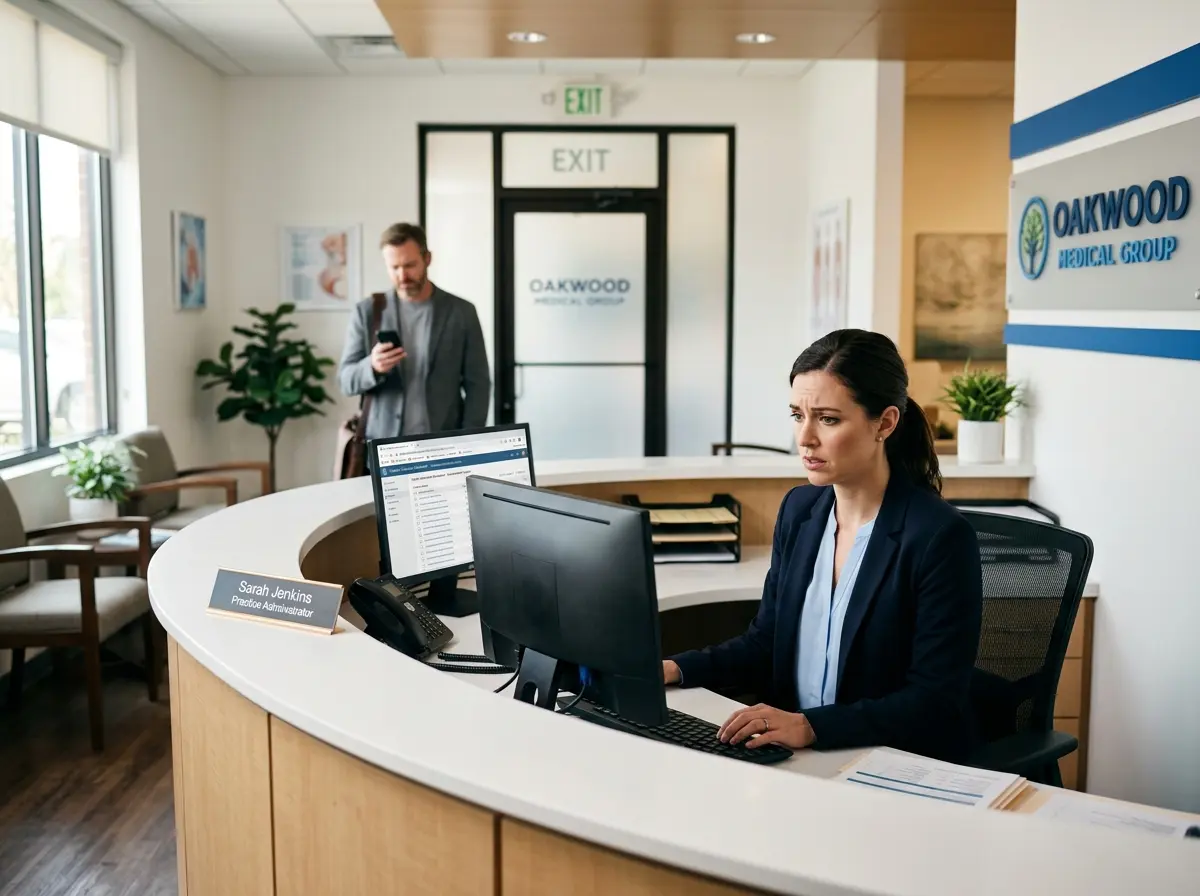
The Waiting Room No One Talks About
You've done everything right. Your practice has a professional website, your Google reviews are solid, and your front desk staff is (usually) on their best behavior. A potential patient finds you, gets excited about becoming a new patient, and reaches out. And then... silence. Not from them — from you. Or at least, it feels that way to them.
This invisible waiting room — the gap between a patient's first inquiry and their confirmed first appointment — is quietly costing medical practices thousands of dollars in lost revenue every single month. The frustrating part? Most practice owners don't even know it's happening. Patients don't leave a note that says "I called and no one answered so I booked with your competitor." They just... disappear.
The good news is that this is a solvable problem. The better news is that solving it doesn't require hiring three more staff members or performing any administrative miracles. Let's break down exactly where patients are slipping through the cracks — and what you can actually do about it.
Where the Cracks Actually Are
The After-Hours Black Hole
Here's a fun fact that isn't fun at all: a significant portion of healthcare-related searches happen outside of business hours. People Google symptoms late at night, research new doctors on their lunch break, and decide to finally call about that thing they've been ignoring — usually at 7:43 PM on a Tuesday. And when they call your practice and get a voicemail? Roughly 75% of callers won't leave a message. They'll just hang up and call the next practice on the list.
Your practice isn't losing those patients because of bad reviews or poor care. You're losing them because no one picked up the phone. It's genuinely that simple, and genuinely that painful to admit.
The Speed-to-Response Problem
For those patients who do leave a voicemail or submit a contact form, the clock starts ticking immediately — and it ticks faster than most practice managers realize. Research from Harvard Business Review found that businesses that respond to leads within an hour are seven times more likely to have a meaningful conversation with a decision-maker than those who wait even an hour longer. In healthcare, where patients are already anxious and often shopping around, slow follow-up is essentially a referral to your competitor.
Your front desk team is juggling check-ins, insurance verifications, phone calls, and the occasional patient who wants to discuss their entire medical history at the window. Rapid response to new inquiries isn't always possible — and that's not a criticism of your staff, it's just reality. But reality has consequences.
The New Patient Intake Friction Trap
Let's say a patient does get through and speaks with someone. Now they need to schedule, and your intake process kicks in. If that process involves being put on hold, asked to call back, or — the classic — being told "we'll send you some paperwork to fill out before your appointment," you've introduced friction at exactly the wrong moment. New patients haven't built loyalty yet. They're still one inconvenience away from booking somewhere else.
A clunky intake process signals to patients, fairly or not, that the rest of their experience will be equally cumbersome. First impressions in healthcare aren't just about bedside manner — they start the moment someone tries to become your patient.
How Technology Can Close the Gap (Without Replacing Your Team)
Let Stella Handle the Phones When Your Staff Can't
This is where Stella, the AI robot employee and phone receptionist, becomes genuinely relevant to your practice's bottom line. Stella answers phone calls 24/7 with the same knowledge your staff would use — practice hours, services offered, insurance questions, appointment availability, and more. She can collect new patient information conversationally during the call itself using built-in intake forms, log everything into her CRM with AI-generated contact profiles, and push notifications to your managers so nothing falls through the cracks overnight.
For practices with a physical location, Stella also works as a friendly in-person kiosk, greeting patients who walk in and answering common questions so your front desk team can focus on tasks that actually require a human. She doesn't call in sick, doesn't need a lunch break, and won't accidentally put a new patient on hold for six minutes while she tracks down a colleague.
At $99/month with no upfront hardware costs, she's considerably less expensive than the revenue you're losing every time an after-hours call goes unanswered.
Building a Response System That Actually Works
Define Your Response Protocols Before You Need Them
One of the most overlooked causes of slow follow-up is the absence of a clear protocol. Who is responsible for responding to new patient inquiries? What's the target response time? What happens when that person is out? If the answers to these questions live only in someone's head — or worse, nowhere at all — you'll continue to have inconsistent follow-up regardless of how many tools you implement.
Write it down. Assign ownership. Set a response time goal of under one hour during business hours and establish what the patient experience looks like outside those hours. Even a simple flowchart shared with your front desk team can reduce dropped inquiries dramatically. Clear processes aren't glamorous, but they're the foundation everything else is built on.
Audit Your Intake Experience Like a New Patient Would
Here's an exercise worth doing: call your own practice as if you were a nervous new patient who has never been there before. Note how long it takes for someone to answer. Pay attention to whether the person who picks up sounds rushed or disengaged. Try to schedule an appointment and notice every moment of friction along the way. Most practice owners find this exercise uncomfortably revealing.
Once you've identified where the experience breaks down, prioritize the fixes that affect first-time callers most heavily. That might mean rewriting your voicemail greeting, reducing the number of questions asked during initial scheduling, or streamlining how new patient paperwork is collected and processed. Small changes at this stage have an outsized impact because you're removing barriers before loyalty has even had a chance to form.
Follow Up More Than You Think You Should
If a potential patient expresses interest but doesn't book immediately, don't treat that as a dead lead. A simple follow-up call or message 24 to 48 hours later — a gentle "we'd love to get you scheduled, do you have any questions?" — can recover a surprising number of patients who simply got busy or needed a nudge. Most practices never make that second contact, which means the bar for standing out is remarkably low.
Consider building a follow-up sequence into your process: an immediate acknowledgment when an inquiry is received, a personal follow-up within one business day if no appointment is booked, and a final check-in a few days later for those who still haven't committed. It's not pushy — it's attentive, and patients notice the difference.
Quick Reminder About Stella
Stella is an AI robot employee and phone receptionist designed for businesses of all sizes — including medical practices that can't afford to miss a single new patient inquiry. She answers calls around the clock, collects intake information conversationally, manages contacts through a built-in CRM, and keeps your team informed with AI-generated summaries and real-time notifications. She's available for just $99/month with no upfront costs and is ready to work from day one.
Closing the Gap Starts Today
The gap between inquiry and first appointment isn't a minor administrative nuisance — it's one of the most expensive problems your practice has, and it's hiding in plain sight. Every unanswered after-hours call, every slow follow-up, and every friction-filled intake experience represents a patient who wanted to choose you and ended up choosing someone else instead.
The path forward is straightforward, even if it takes a little work to implement. Start by auditing where your current process breaks down. Then put systems in place — whether that's clearer internal protocols, smarter technology, or both — to ensure that every patient who reaches out gets a prompt, professional, and welcoming response. The practices that grow consistently aren't necessarily the ones with the best doctors or the fanciest waiting rooms. They're the ones that make it effortless to become a patient in the first place.
You've already done the hard work of building a practice worth choosing. Make sure patients can actually get in the door.