Introduction: Because Bugs Don't Take Vacations (and Neither Should Your CRM)
Let's be honest — running a pest control company is not exactly like running a boutique candle shop. Your customers aren't browsing for fun. They're calling you because something with six legs just crawled across their kitchen counter, or because they've committed to never letting that happen again. Either way, they need you consistently, and that's actually your superpower: recurring service contracts are the lifeblood of a thriving pest control business.
But here's the uncomfortable truth that most pest control owners eventually face: a sticky note on the desk and a spreadsheet held together with hope is not a recurring service management strategy. When you're juggling dozens — or hundreds — of quarterly treatments, seasonal inspections, and monthly maintenance contracts, things fall through the cracks. Appointments get missed. Renewal reminders don't go out. A loyal customer quietly switches to your competitor because nobody followed up. Ouch.
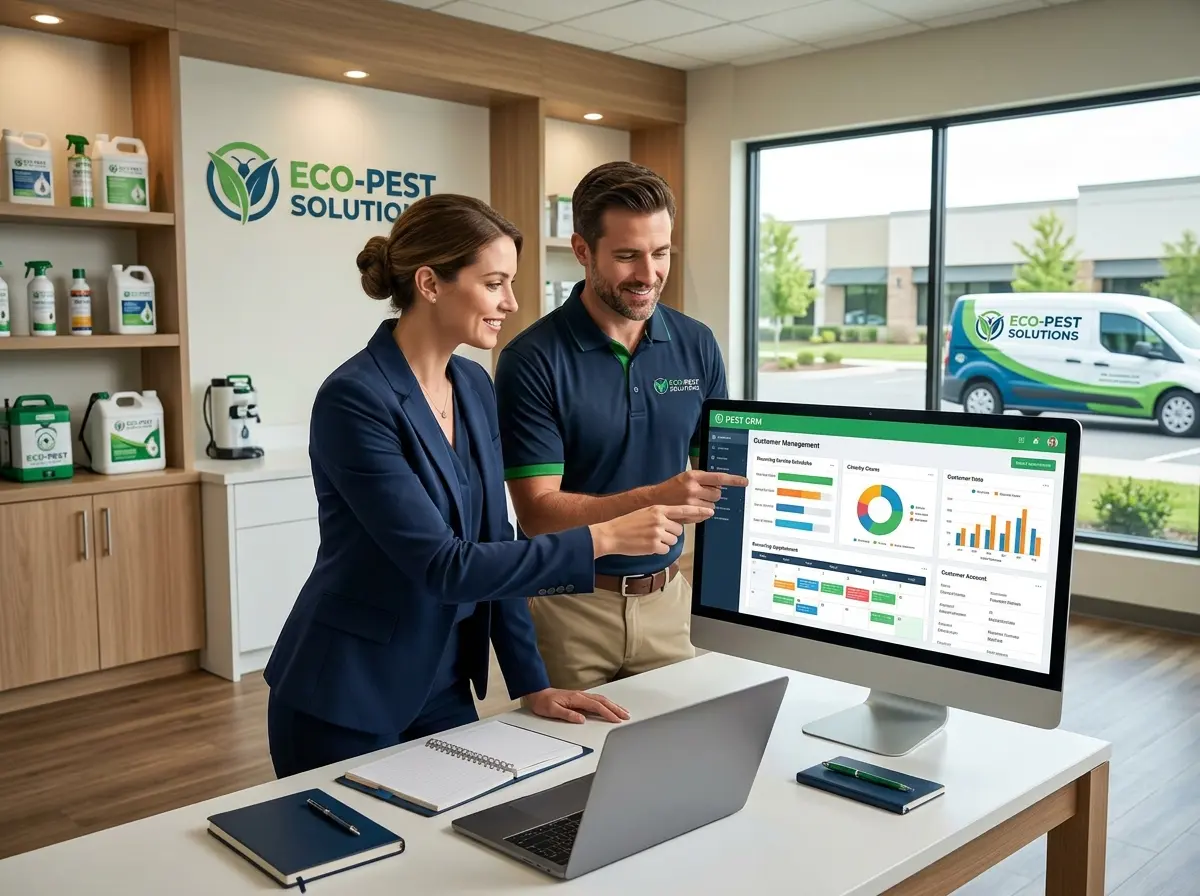
That's where a Customer Relationship Management (CRM) system becomes less of a "nice-to-have" and more of a genuine business survival tool. Used correctly, a CRM doesn't just store contact information — it becomes the brain of your entire recurring service operation. Let's walk through how to actually use it.
Building a CRM Foundation That Works for Pest Control
Custom Fields Are Your Best Friend
Out-of-the-box CRM setups are designed for the average business, and pest control is anything but average. Before you start dumping contacts into your system, take the time to configure custom fields that actually reflect how your business operates. Think about what you genuinely need to know about each customer property: square footage, type of structure (residential vs. commercial), pest history, treatment type, chemical sensitivities, pet presence, and access notes (yes, "beware of the dog named Princess who absolutely will bite you" counts as critical field data).
The more relevant your fields, the more useful your records become. A technician arriving at a job with a complete property profile is infinitely more prepared than one showing up cold. Custom fields also allow you to filter and segment your customer list with precision — more on why that matters in a moment.
Tags and Segments: Stop Treating Every Customer the Same
Not all pest control customers have the same needs, and your CRM should reflect that. Use tags to group customers by service type (monthly, quarterly, annual), by pest category (termite program, general pest, rodent exclusion), by location zone, or by contract status (active, expired, pending renewal). This kind of segmentation lets you send targeted communications, plan technician routes more efficiently, and identify which service lines are growing — or shrinking.
For example, if you tag all customers on a quarterly exterior spray program, you can pull that list in the fall and send a proactive message about transitioning to a winter rodent prevention service. That's not just good customer service — that's a revenue-generating move disguised as helpful communication. Your customers will appreciate the heads-up, and your bank account will too.
Notes and Service History: The Paper Trail That Saves You
Every technician visit should result in a CRM note. What was treated? What was found? What was recommended? If a customer calls six months later complaining about a recurring issue, the last thing you want is to start the conversation with "So, what have we done for you in the past?" That's a fast track to losing their trust. A well-maintained service history log turns every customer interaction into institutional knowledge that survives staff turnover, schedule changes, and the general chaos of a busy season.
How Stella Can Help You Stay on Top of Customer Management
Never Miss a Lead, Inquiry, or Renewal Call Again
Here's a scenario that plays out in pest control companies every single day: a potential new customer calls during a busy morning, nobody picks up, they leave a voicemail that gets checked three days later, and by then they've already booked with someone else. Meanwhile, your existing customers trying to reschedule a quarterly visit get bounced to voicemail and feel like an afterthought. This is the kind of quiet revenue loss that's hard to see on a spreadsheet but absolutely shows up on your bottom line.
Stella is an AI robot employee and phone receptionist that answers calls 24/7, handles customer inquiries, collects intake information through conversational forms, and even promotes your current service packages — all without a lunch break or a bad Monday. For pest control companies managing recurring service relationships, Stella's built-in CRM is a natural extension of your operations. She captures caller information, logs it directly into contact records with AI-generated profiles, and can tag customers based on the services they inquire about. That means your CRM stays current even when your staff is elbow-deep in a commercial kitchen treatment. And if your business has a physical location — say, a retail storefront or a franchise office — Stella also operates as an in-store kiosk, greeting walk-in customers and answering their questions with the same knowledge she uses on the phone.
Automating Recurring Service Workflows Without Losing the Human Touch
Renewal Reminders That Actually Get Sent
One of the biggest operational failures in recurring service businesses is the gap between "we should remind customers before their contract expires" and "we actually reminded them." Manual processes depend on someone remembering to act, and that someone is usually busy doing seventeen other things. Your CRM should be handling renewal reminders automatically, triggered by contract end dates stored in those custom fields you set up earlier.
A good renewal sequence might look like this: an email reminder 60 days before contract expiration, a follow-up 30 days out, a phone call attempt at two weeks, and a final outreach on the expiration date. Some CRM platforms allow you to automate all of this. Others require you to build task queues that prompt your team to take action. Either way, the reminder logic lives in the system — not in someone's head.
Scheduling Follow-Ups and Seasonal Upsells
Pest control is beautifully seasonal, which means your CRM can be a proactive revenue engine rather than just a passive record-keeper. Map out your local pest activity calendar — termite swarm season, mosquito season, fall rodent migration — and build automated or semi-automated outreach campaigns around those windows. Customers on a basic quarterly program are natural candidates for a mosquito add-on in spring. Customers with a history of rodent activity are prime targets for a fall exclusion service consultation.
The data is already in your CRM. The trick is building the habit — and eventually the automation — to actually use it. Start small: pick one upsell campaign per quarter, pull the relevant customer segment, and send a targeted message. Track your conversion rate. Refine. Repeat. Over time, this becomes a significant revenue driver that runs almost on autopilot.
Measuring What Actually Matters
A CRM without reporting is just an expensive address book. Make sure you're regularly reviewing metrics that tell you how your recurring service business is actually performing. Key numbers to track include customer retention rate (are people renewing?), average contract value over time, churn by service type, and revenue by technician or route. These numbers tell you stories that your gut instinct simply can't. If your termite contract renewal rate is significantly lower than your general pest renewal rate, that's a signal worth investigating — not ignoring.
Quick Reminder About Stella
Stella is an AI robot employee and phone receptionist available for just $99/month with no upfront hardware costs. She answers calls around the clock, greets customers in-store, collects intake information, manages CRM contacts, and keeps your business running professionally even when your team is in the field. For pest control companies managing recurring contracts and high call volumes, she's the kind of reliable, tireless presence that makes a measurable difference.
Conclusion: Your CRM Won't Work If You Don't
Here's the bottom line: a CRM is not magic software that fixes your recurring service management by existing on your computer. It's a system that rewards the businesses who commit to using it well — setting up smart fields and tags, maintaining accurate service histories, building automated reminders, and actually reviewing the data it generates. The pest control companies that do this consistently are the ones with high renewal rates, growing average contract values, and customers who feel like they're being taken care of rather than forgotten about.
If you're just getting started, don't try to overhaul everything at once. Pick one area — maybe it's setting up custom fields and tagging your active recurring customers — and do it well before moving to the next. Build the foundation, then build on top of it.
And if managing inbound calls, customer intake, and contact records feels like one too many plates to keep spinning, consider letting an AI handle some of that load. Your job is to run a great pest control operation. Let the right tools handle the rest.