Introduction: The Hidden Revenue Sitting in Your Truck Bed
Let's be honest — most landscaping business owners are leaving money on the table. Not intentionally, of course. You show up, you do beautiful work, you get paid, and you move on to the next job. Rinse, repeat, hope the season is long. But here's the uncomfortable truth: your customers want to spend more money with you. They just need someone to ask.
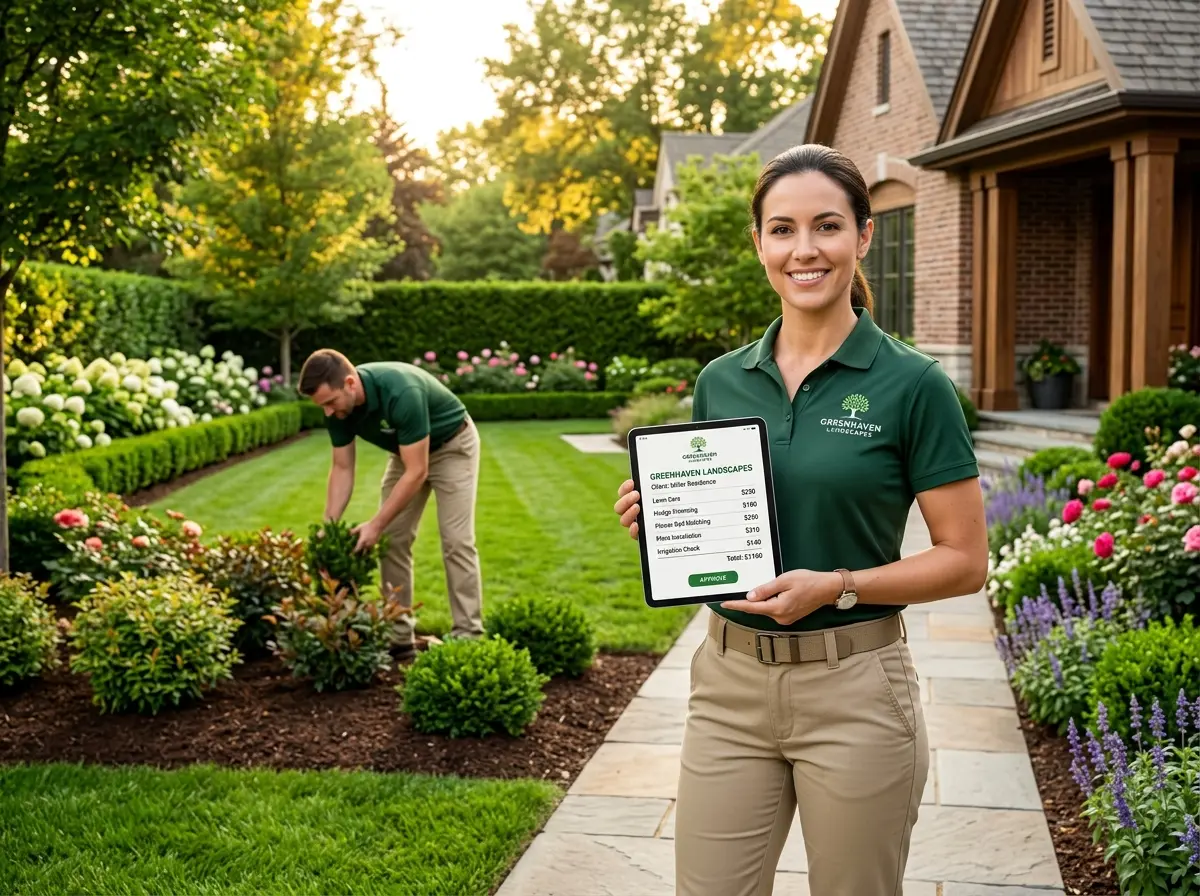
That's where strategic service add-ons come in. We're not talking about sleazy upselling or pressure tactics. We're talking about genuinely useful services that solve problems your customers already have — they just haven't thought about it yet. One landscaping company figured this out and started consistently adding $500 or more per job by making a few smart, intentional changes to how they present their services. No new equipment. No new crew members. Just a better system for having the right conversation at the right time.
In this post, we'll break down exactly how they did it, what add-ons work best, how to present them without feeling awkward, and how to build a repeatable process so this becomes the norm — not the exception.
The Add-On Strategy That Actually Works
Start With Problems, Not Services
The biggest mistake landscaping businesses make when trying to upsell is leading with the service itself. "Would you like mulching?" lands very differently than "I noticed your beds are looking a little bare — that's actually going to invite weeds by mid-summer. Want me to take care of that while we're already here?" One sounds like a sales pitch. The other sounds like a trusted professional looking out for their client.
The landscaping company that cracked the $500-per-job code trained their crews to do a quick walkthrough assessment at the start of every visit. Not a formal inspection — just a trained eye scanning for common issues: dry or compacted soil, overgrown edging, stressed turf, poor drainage, bare spots near the house. When they spotted something, they mentioned it conversationally. This approach converted because it felt helpful, not pushy. Customers responded with, "Oh, can you handle that today?" more often than anyone expected.
The Add-Ons That Deliver the Best ROI
Not all add-ons are created equal. Some require expensive equipment or extra crew time, while others are high-margin services that can be completed quickly. The most profitable add-ons tend to cluster around a few categories:
- Mulching and bed refresh: Low labor cost, high perceived value, and customers love the visual impact. A two-person crew can knock out a standard property in under an hour.
- Seasonal treatments: Pre-emergent weed control, fertilization, and aeration are easy to bundle with existing visit schedules.
- Edging and border definition: Often overlooked but dramatically improves curb appeal — and it's fast.
- Gutter cleaning: Especially effective for fall visits. If you're already there with a crew, the incremental cost to you is minimal.
- Irrigation checks and winterization: High-ticket, recurring, and something most homeowners genuinely forget about until it's too late.
The key insight from this landscaping company was to bundle two or three smaller add-ons into a named package — something like a "Spring Kickoff Package" or "Fall Prep Bundle." Naming it made it feel intentional rather than improvised, and customers were more likely to say yes to a package than to individual line items.
Pricing Add-Ons With Confidence
Here's where a lot of landscaping owners stumble: they underprice add-ons out of fear that customers will say no. But research consistently shows that customers often perceive lower prices as lower quality — especially for services that affect the appearance of their home. If you're offering to transform someone's flower beds, charge accordingly.
A good rule of thumb is to price add-ons at a minimum of 40–50% gross margin after labor and materials. For high-demand seasonal services, don't be afraid to go higher. The company in our example started being more assertive with pricing after realizing that their "yes rate" didn't actually drop when they raised prices — it just meant they made more money on every conversion. That's a trade worth making.
How Technology Can Help You Capture More Add-On Revenue
Using Tools to Promote Services Before the Crew Even Arrives
Timing matters. The best moment to introduce an add-on isn't always mid-job — sometimes it's before the crew shows up. Confirmation calls, reminder texts, and even your phone interactions with new customers are all prime opportunities to mention what's currently available. This is where having a smart, consistent front-end communication system pays off.
Stella, the AI robot employee and phone receptionist, is built to do exactly this. When customers call to schedule or ask questions, Stella can naturally weave in information about current seasonal promotions and service bundles — the same way a well-trained receptionist would, just without the inconsistency (or the coffee breaks). For landscaping businesses with a physical location or showroom, her in-store kiosk presence means walk-in customers get the same informed, promotional conversation before they even talk to your team. Every touchpoint becomes an opportunity to plant the seed — pun very much intended.
Building a Repeatable System for Consistent Results
Train Your Crew to Spot and Mention Opportunities
One of the most powerful things this landscaping company did was invest about 30 minutes per week in what they called "opportunity training." At the start of each week, the owner would walk the team through two or three common property issues and practice how to bring them up naturally in conversation. It wasn't a hard sell script — it was more like coaching employees on how to be genuinely helpful and communicate clearly.
Over time, this became second nature. Crew members stopped seeing upsells as awkward and started seeing them as part of doing their job well. When you reframe add-ons as "things we noticed that could become a bigger problem," the whole dynamic shifts. Customers feel cared for, crew members feel confident, and revenue goes up. Everybody wins — except maybe the weeds.
Create a Simple Follow-Up Process
Not every customer will say yes on the spot, and that's completely fine. The mistake is treating a "maybe later" as a "never." This company implemented a simple follow-up system: any add-on that was mentioned but not accepted got logged, and the customer received a brief follow-up message — either a text or a call — about two weeks later referencing the specific issue that was flagged. The conversion rate on these follow-ups was surprisingly high, often around 25–30%.
You don't need complex software for this. Even a basic CRM or a shared notes doc can capture these moments. The discipline is in actually doing it, consistently, job after job. That consistency is what separates businesses that have a good month from businesses that have a good year.
Track What's Working and Double Down
Once you have a few add-ons in rotation, start tracking which ones convert best, which customers say yes most often, and which crew members are generating the most add-on revenue. This data tells you where to focus your training, your promotions, and your inventory. It's not glamorous work, but it's the kind of thing that compounds over a season into a very meaningful number. The landscaping company we've been referencing estimated that their add-on strategy was responsible for roughly $80,000 in additional annual revenue — without adding a single new customer.
Quick Reminder About Stella
Stella is an AI robot employee and phone receptionist that greets customers in person at your location and answers calls 24/7 with full knowledge of your services, promotions, and seasonal offerings. She upsells and cross-sells naturally, collects customer information, and keeps your front-end communication professional and consistent — all for just $99/month. If your phone is the first place customers hear about your add-ons, Stella makes sure they hear about them every single time.
Conclusion: $500 Per Job Doesn't Happen by Accident
The landscaping company in this story didn't stumble into an extra $500 per job. They built a system — one that identified opportunities, trained people to communicate them well, priced services with confidence, and followed up consistently. None of it was complicated. All of it required intention.
Here's what you can do this week to start moving in the same direction:
- Pick two or three add-on services that are high-margin and genuinely useful for your typical customer.
- Create a simple bundle with a name and a fixed price — make it easy for customers to say yes.
- Brief your crew on how to mention these add-ons conversationally during walkthroughs.
- Set up a basic follow-up process for customers who express interest but don't commit on the spot.
- Track results weekly so you know what's working and can adjust accordingly.
The opportunity is real, the execution is straightforward, and the revenue is waiting. Your customers already trust you with their property — they're more than willing to let you do a little more while you're there. You just have to ask.