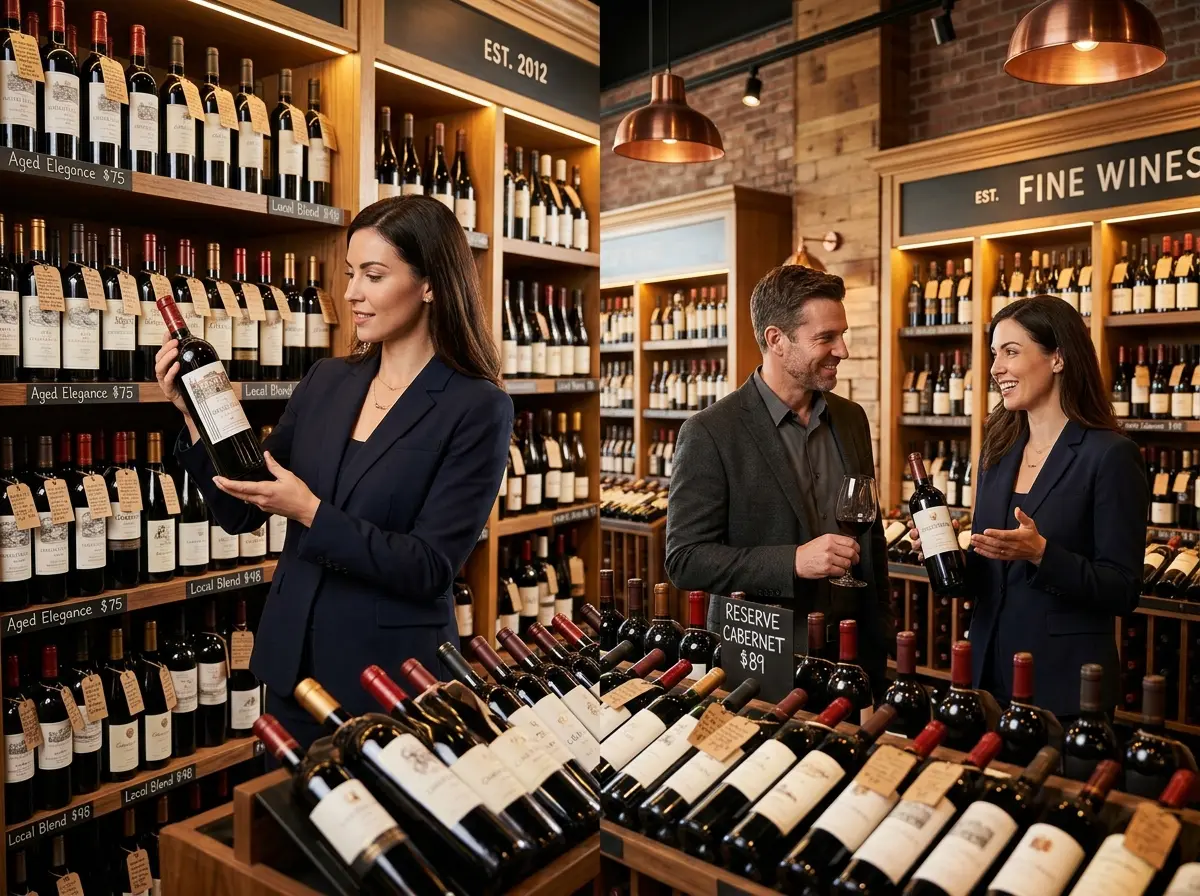
Why Your Wine Is Gathering Dust (And What to Do About It)
Let's be honest — a bottle of wine sitting on a shelf with nothing but a price tag is just a bottle of wine. It could be extraordinary. It could be the perfect gift. It could be the thing that makes someone's anniversary dinner unforgettable. But without a story, it's just glass and liquid and a label nobody recognizes. And you, the liquor store owner, are leaving serious money on the table.
The difference between a $12 bottle and a $45 bottle isn't always what's inside — it's often what the customer believes is inside. That belief is built through storytelling. Wineries know this. Wine bars know this. Now it's time for your retail floor to know it too.
Product storytelling isn't some abstract marketing concept cooked up in a Madison Avenue boardroom. It's the practical art of giving customers a reason to care — and a reason to buy. According to a Nielsen study, products with a clear, compelling narrative can command a price premium of up to 20% over similar, unlabeled alternatives. That's not nothing. That's the difference between a slow Tuesday and a genuinely good month.
This guide will walk you through exactly how to turn your shelves into a storytelling machine, increase average transaction value, and make your customers feel like the wine experts they've always secretly wanted to be.
The Art of the Story: What Makes Customers Actually Care
Origin Stories Are Your Best Sales Tool
Every wine comes from somewhere — a specific region, a specific family, a specific philosophy about how grapes should be grown. That backstory is pure gold, and most liquor stores completely ignore it. Consider the difference between these two shelf descriptions:
Option A: "Malbec, Argentina, 14.5% ABV, $18.99"
Option B: "From a family-owned estate nestled in the high-altitude vineyards of Mendoza, this Malbec spends 12 months in French oak and drinks like something that costs twice the price. Think dark cherry, a hint of leather, and a finish that sticks around long enough to be interesting."
Same bottle. Completely different experience. Option B doesn't just describe the wine — it transports the customer. It gives them something to say when they hand it to a friend at a dinner party. And that social currency is worth a lot. Train your staff to lead with origin when customers look curious but hesitant, and consider investing in simple shelf talkers that hit the highlights: the region, the winemaker's philosophy, and one or two tasting notes in plain English.
Pair the Story With an Occasion
Most customers don't walk into your store thinking about appellations and tannin structure. They're thinking: I have a dinner on Friday, what do I bring? Or: We're doing a backyard barbecue, what's good for a crowd? Meeting them where they are — in terms of occasion rather than technicality — is one of the fastest ways to convert a browser into a buyer.
Create occasion-based groupings on your floor or in your displays. A "Date Night" section, a "Summer Patio" table, a "Hostess Gift Under $30" end cap. Then tell the story in the context of that occasion. "This Côtes du Rhône is the kind of bottle you open when you want to impress without overthinking it — pairs beautifully with roasted chicken or a good cheese board." Suddenly you're not selling wine; you're solving a problem. Customers love that.
Don't Underestimate the Power of Your Own Voice
One of your most underused storytelling assets is your own opinion. A personal recommendation — even a handwritten one — carries enormous weight. "This is the bottle I brought to my sister's birthday dinner and I still get texts about it" is infinitely more persuasive than any corporate tasting note. Encourage staff to pick a weekly favorite and write a short, casual note for the shelf. It humanizes your store, builds trust, and differentiates you from every big-box retailer that can't offer anything resembling a personal touch.
How Technology Can Help You Tell Better Stories at Scale
Let an AI Assistant Do the Heavy Lifting on the Floor
Here's the inconvenient truth about storytelling at retail: your staff can't be everywhere at once. A customer lingers near the Burgundy section looking mildly confused, your one knowledgeable employee is helping someone else, and the moment passes. The customer grabs whatever has a recognizable label and leaves $40 on the table.
This is exactly where Stella earns her keep. Stella is an AI robot employee and phone receptionist designed for businesses like yours. Standing inside your store as a friendly, human-sized kiosk, she proactively engages customers who walk by — sharing stories about featured bottles, explaining what pairs well with what, highlighting current promotions, and answering questions your staff doesn't have time to field. She doesn't take breaks, doesn't have bad days, and never forgets the talking points you've given her. And when customers call in to ask what you have in stock or what you'd recommend for a holiday party, Stella answers the phone 24/7 with the same product knowledge she uses on the floor. It's consistent storytelling, at scale, without adding to your payroll.
Turning Shelf Presence Into Serious Upsell Opportunities
The Bundle Is Your Friend
If someone is buying a nice bottle of red, they probably wouldn't say no to a complementary cheese pairing suggestion, a wine preserver, or a second bottle at a slight discount. The key is making the bundle feel curated rather than commercial. "We put together a 'Dinner for Two' kit — this Barolo, a wedge of aged Parmigiano, and a bar of dark chocolate — because life is short and Tuesday deserves to be treated like a Friday." That framing sells the idea before the customer even thinks about the price.
Research consistently shows that bundled offers increase average order value by 10–30% in retail environments. For a liquor store, where margins on accessories and add-ons can be significantly higher than on the wine itself, this is low-hanging fruit. Build a few signature bundles, give them names, tell the story behind them, and watch your average ticket climb.
Leverage Seasonal Storytelling Year-Round
Seasons and holidays are your built-in content calendar. Summer calls for crisp whites, rosés, and light-bodied reds that survive a backyard cooler. Fall is the season of bold reds, harvest dinners, and bottles worthy of Thanksgiving. The holidays bring gifting anxiety and generous budgets. Valentine's Day is basically a commercial for sparkling wine.
The point is: there is never a slow storytelling season if you're paying attention. Create themed displays that rotate with the calendar, write seasonal shelf talkers, and promote your seasonal picks through any customer communication channels you have — email, text, social. Give the bottles context, give them an occasion, give them a reason to exist in someone's home right now. That urgency is what converts browsing into buying.
Train Your Team to Close With a Story
Your staff are your front-line storytellers, and they need the tools to do it well. Consider a brief weekly "bottle of the week" briefing — five minutes where you share the story behind one featured wine: where it's from, who made it, what it tastes like, and who it's perfect for. Give them a line or two they can actually say to a customer without sounding like they memorized a textbook. "This one's from a tiny producer in Sicily — they only make about 2,000 cases a year and it's honestly one of the best values we carry" is a complete sales pitch. It's specific, it creates scarcity, and it positions your store as a source of insider knowledge.
Quick Reminder About Stella
Stella is an AI robot employee and phone receptionist built for businesses that want a reliable, professional presence without the overhead. She greets customers on your floor, answers phone calls around the clock, promotes your current deals, and helps customers find exactly what they're looking for — whether they're standing in your store or calling from their couch on a Sunday night. At $99/month with no upfront hardware costs, she's the team member who's always ready and never calls in sick.
Start Telling Better Stories Tomorrow
You don't need a marketing degree or a massive budget to sell more wine. You need to give your bottles a voice. Start small: pick five bottles this week and write a two-sentence story for each one. Put them on index cards near the shelf. See what happens. Then expand from there — occasion-based displays, staff picks, seasonal bundles, and eventually a consistent in-store and phone presence that tells your story even when you're not around.
The liquor stores that win long-term aren't necessarily the ones with the biggest selection or the lowest prices. They're the ones that make customers feel something — curious, excited, understood, confident. That's what storytelling does. And the good news is, you already have everything you need to start. You have great products, you have a customer base that wants to enjoy them, and now you have a roadmap.
Go tell some stories. Your shelves are waiting.