So, Your Retail Business Is Growing — Now What?
Congratulations! Your retail business is growing. Customers are coming in, sales are climbing, and everything is going great — except for the part where your old point-of-sale system is held together with digital duct tape and sheer optimism. If you're still running your store on legacy POS software that requires a dedicated server, manual updates, and the IT expertise of a 1990s network administrator, it might be time for a serious conversation about cloud-based POS systems.
A cloud-based POS system isn't just a tech upgrade. It's a foundational shift in how your business operates, tracks inventory, manages staff, and serves customers. For growing retail businesses especially, the ability to scale without overhauling your entire tech stack is nothing short of a superpower. In this post, we'll break down the real, tangible benefits of making the switch — and why putting it off is costing you more than you think.
What a Cloud-Based POS System Actually Does for Your Business
Real-Time Data, Anywhere You Have Wi-Fi (or a Signal)
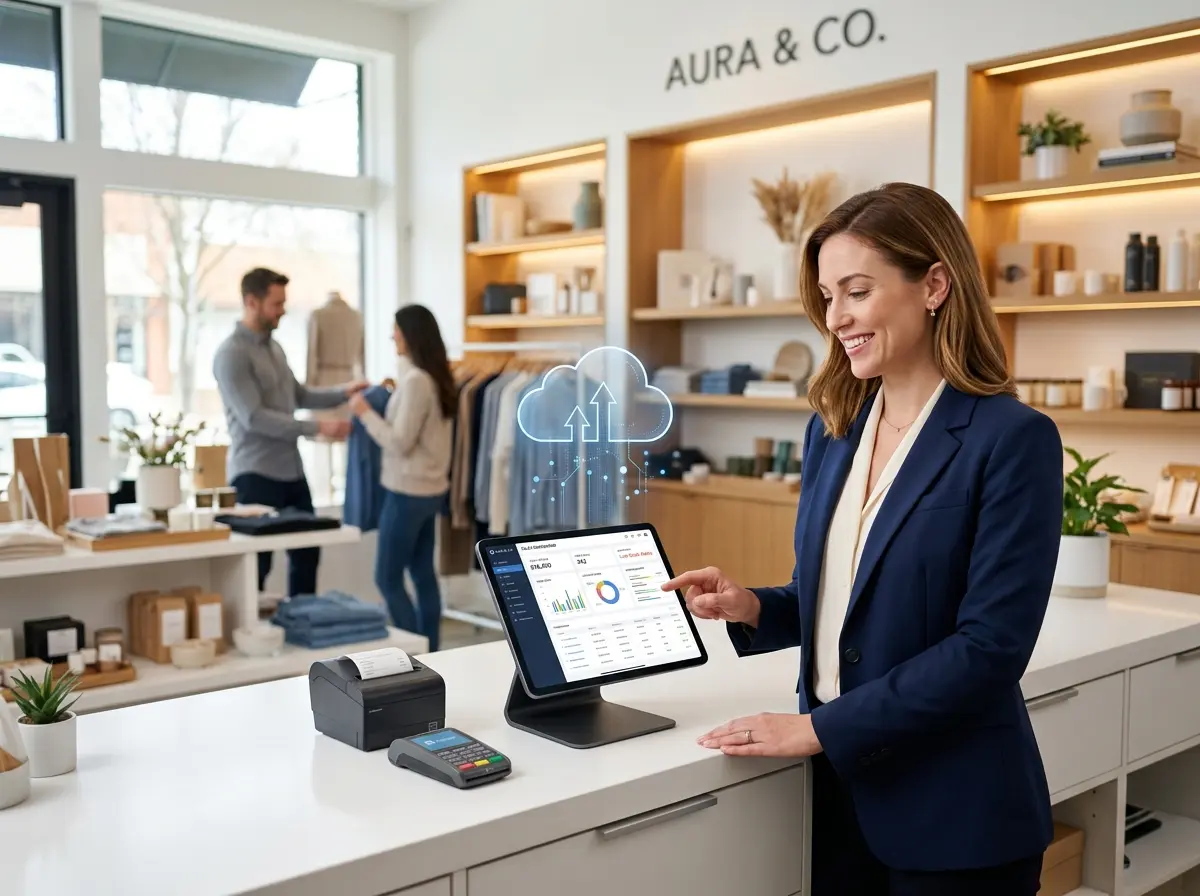
One of the most underrated benefits of a cloud-based POS is access to real-time data from anywhere. Whether you're on the sales floor, sitting in a coffee shop, or — let's be honest — checking sales numbers from your couch at 10 PM, you can see exactly what's happening in your store. Inventory levels, top-selling products, revenue snapshots, and staff performance metrics are all available at your fingertips.
This matters more than it sounds. According to a study by Boston Retail Partners, nearly 80% of retailers say real-time retail is a priority, yet many still rely on end-of-day batch reporting that tells them what happened hours ago. With cloud-based POS, you're not reading yesterday's news — you're watching the story unfold in real time.
For multi-location retailers, this becomes even more critical. You can monitor performance across all locations without physically being present, set alerts for low inventory thresholds, and compare store performance side by side. That's not just convenience — that's strategic advantage.
Inventory Management That Doesn't Make You Want to Cry
Manual inventory tracking is the retail equivalent of doing your taxes by hand every single day. It's tedious, error-prone, and completely unsustainable at scale. A cloud-based POS system automates inventory tracking with every transaction, giving you an accurate picture of stock levels without the clipboard and the counting.
Modern cloud POS platforms can automatically generate purchase orders when stock dips below a set threshold, flag slow-moving items, and even integrate with your suppliers for streamlined reordering. For growing retailers managing hundreds or thousands of SKUs, this kind of automation isn't a luxury — it's a lifeline. Shrinkage, overstock, and stockouts are expensive problems, and most of them stem from poor inventory visibility. Solving that problem is worth the price of admission alone.
Seamless Integration with Your Other Business Tools
Your POS system doesn't live in a vacuum. It needs to talk to your accounting software, your e-commerce platform, your loyalty program, your email marketing tools, and a dozen other systems that keep your business running. Legacy on-premise POS systems are notoriously bad at this — integrations are clunky, expensive, and often require custom development work that costs more than the software itself.
Cloud-based POS systems are built with integration in mind. Most modern platforms offer native connections to popular tools like QuickBooks, Shopify, Mailchimp, and more — often through simple, one-click setups. This means less manual data entry, fewer errors, and a business that actually functions as a cohesive system rather than a collection of disconnected tools.
Scaling Up Without Melting Down
Adding Locations, Registers, and Staff Without a Headache
Here's where cloud-based POS systems really shine for growing retailers: scalability. Opening a second location with a traditional POS setup can mean purchasing new servers, paying for software licenses, hiring someone to set it all up, and then hoping everything talks to each other properly. With a cloud-based system, adding a new location is often as simple as activating a new account, configuring your settings, and plugging in your hardware. The data stays centralized, the experience stays consistent, and your IT headaches stay minimal.
The same applies to adding new registers, new staff accounts, or new product lines. Cloud POS systems are designed to grow with you — not against you. And because updates are pushed automatically by the software provider, you're always running the latest version without scheduling maintenance windows or paying for upgrade packages.
How Stella Can Help Complement Your In-Store Operations
As you scale your retail business, customer experience becomes harder to maintain consistently. Your POS handles transactions — but who's handling the customer before they get to the register? That's where Stella, the AI robot employee and phone receptionist, comes in. Stella stands inside your store and proactively greets customers, answers questions about products, highlights current promotions, and even upsells and cross-sells — all without pulling your staff away from their core responsibilities.
Beyond the sales floor, Stella also answers your business phone calls 24/7, handling inquiries about store hours, product availability, policies, and more. For growing retailers who are fielding more calls than ever and can't afford to miss a potential customer, Stella's always-on availability is a genuine operational upgrade. She's not a replacement for your team — she's the dependable presence that handles the repetitive stuff so your team can focus on what actually requires a human touch.
The Financial Case for Making the Switch
Lower Upfront Costs and Predictable Monthly Expenses
Traditional POS systems often come with significant upfront costs — hardware, software licenses, installation fees, and the inevitable "customization" charges that seem to multiply like rabbits. Cloud-based systems flip this model on its head. Most operate on a subscription basis, which means predictable monthly costs that are easy to budget for and easy to justify. You're not making a massive capital investment — you're paying for a service that delivers ongoing value.
This is especially important for growing businesses that need to allocate capital wisely. Every dollar you're not spending on server infrastructure or IT support is a dollar you can reinvest in inventory, marketing, or staff. Over a three-to-five year horizon, the total cost of ownership for a cloud-based POS is almost always lower than its legacy counterpart, particularly when you factor in the cost of downtime, maintenance, and manual workarounds.
Reduced Downtime and Built-In Security
When your on-premise POS server goes down, your business effectively stops. Every minute of downtime is lost revenue, frustrated customers, and a very stressed-out manager. Cloud-based systems are hosted on enterprise-grade infrastructure with redundancy built in, meaning they're far less likely to go down — and when issues do occur, they're the provider's problem to fix, not yours.
Security is another area where cloud-based POS systems have a clear advantage. Reputable providers invest heavily in encryption, PCI compliance, automatic backups, and security updates. Your customer payment data is protected by infrastructure that most small and mid-size retailers could never afford to build or maintain on their own. That's not just good for your customers — it protects you from the kind of data breach that can permanently damage a retail brand's reputation.
Better Reporting Leads to Smarter Decisions
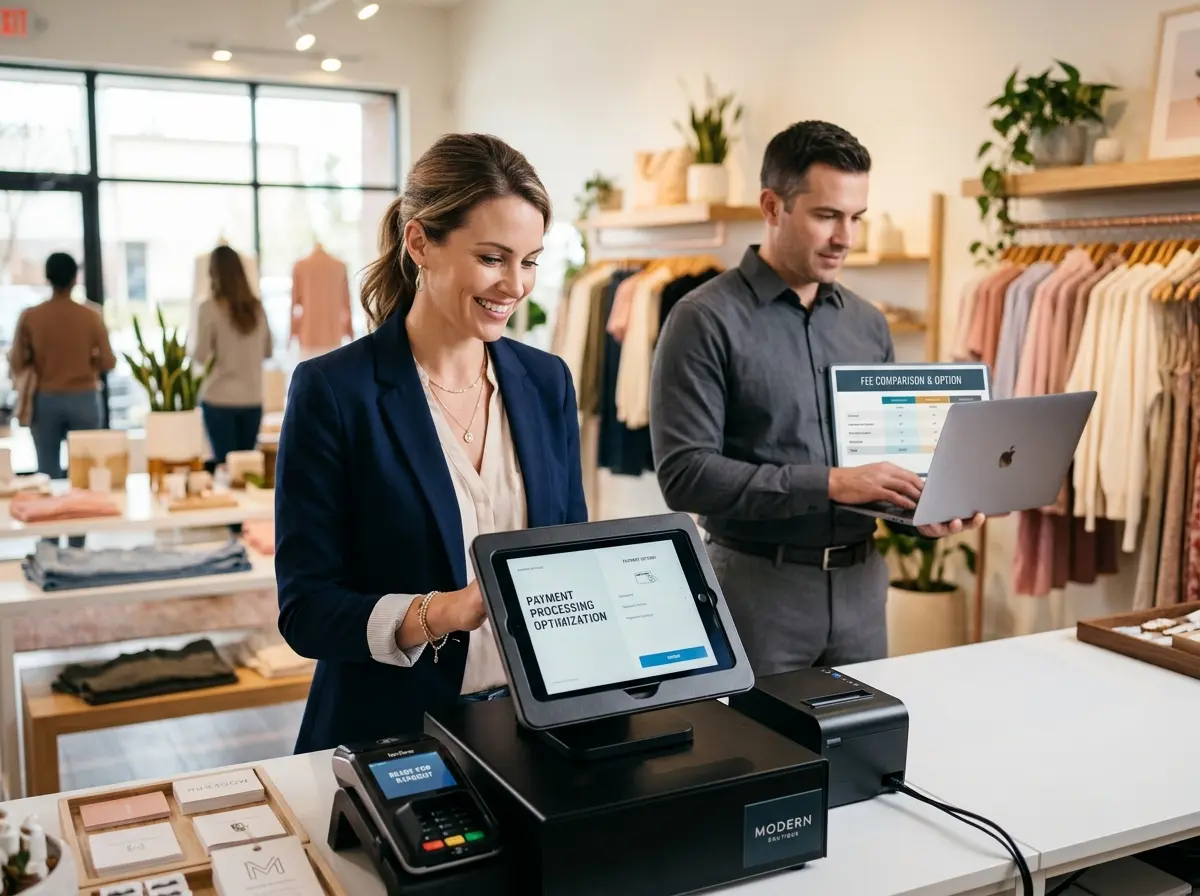
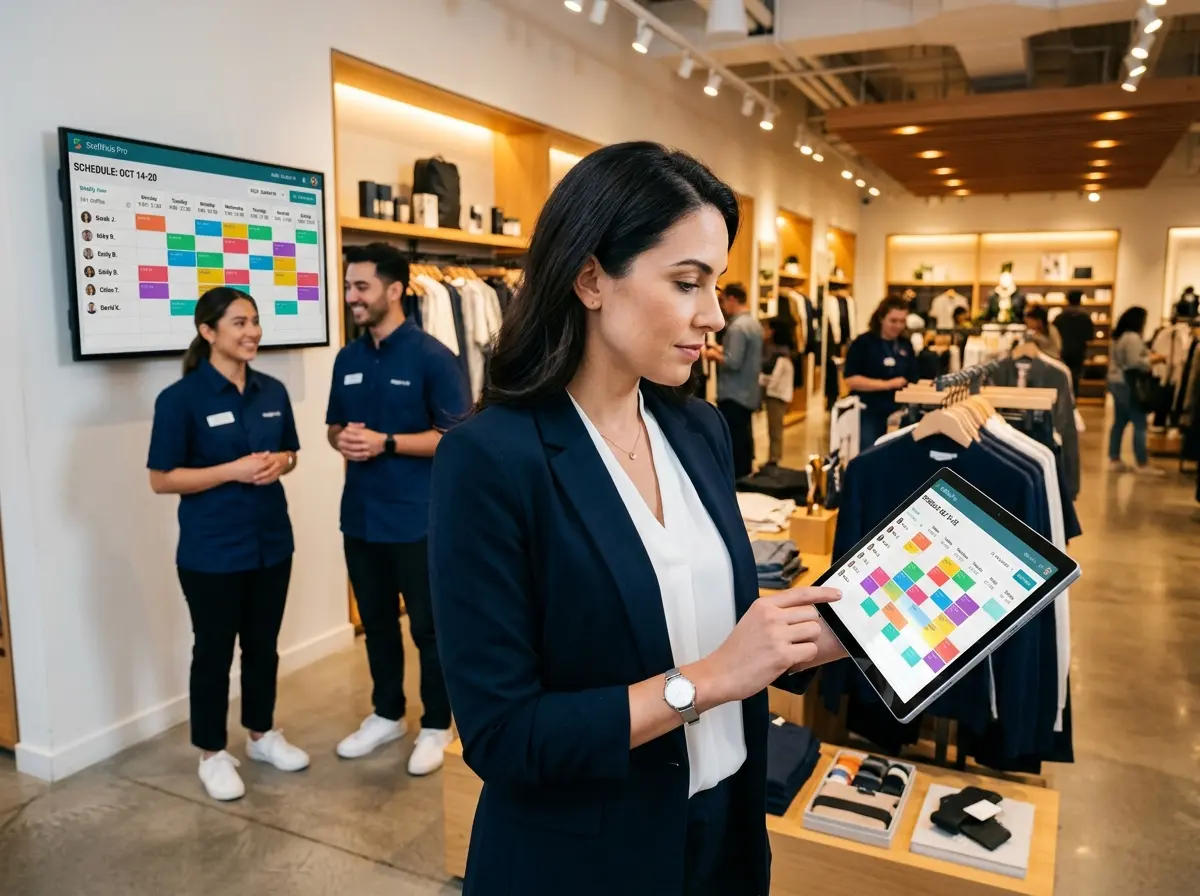
Data is only useful if you can actually understand it. Modern cloud-based POS platforms offer robust reporting dashboards that translate raw transaction data into actionable insights — which products are your top performers, which hours drive the most foot traffic, which promotions actually moved the needle. Armed with this information, you can make smarter purchasing decisions, schedule staff more efficiently, and design promotions that resonate with your actual customer base rather than just hoping for the best.
For growing retailers, this kind of insight is the difference between scaling strategically and just scaling chaotically. Growth without data is guesswork. Growth with data is a plan.
Quick Reminder About Stella
Stella is an AI robot employee and phone receptionist designed specifically for businesses like yours. She greets customers in-store, promotes your deals, answers questions, and handles phone calls 24/7 — all for just $99/month with no upfront hardware costs. If your team is stretched thin as your retail business grows, Stella is exactly the kind of reliable, always-on support that can make a real operational difference.
Ready to Modernize? Here's Where to Start
Making the switch to a cloud-based POS system doesn't have to be overwhelming. Start by auditing your current setup — identify the specific pain points that are costing you time, money, or customers. Is it inventory tracking? Integration with other tools? The inability to access data remotely? Knowing your biggest friction points will help you evaluate which cloud POS platform is the right fit for your business.
From there, request demos from two or three leading providers, ask specifically about migration support and onboarding, and don't underestimate the importance of customer support quality. The best POS system in the world is useless if you can't get help when something goes wrong.
Here's a simple action plan to get started:
- Audit your current POS system — document your biggest frustrations and limitations.
- Define your must-have features — inventory management, multi-location support, integrations, reporting, etc.
- Research and shortlist platforms — popular options include Square for Retail, Lightspeed, Shopify POS, and Clover.
- Request demos and ask hard questions — especially about data migration, downtime, and support.
- Plan your transition timeline — avoid switching during peak sales periods if possible.
A cloud-based POS system is one of the smartest investments a growing retail business can make. It gives you the visibility, flexibility, and scalability to manage growth without losing your mind — or your margin. And when you pair it with tools like Stella to handle customer engagement and phone calls, you've built a foundation that can actually keep up with your ambitions. Your future self — the one running a thriving, well-organized retail operation — will thank you.