So You Want to Sell Records Online Without Losing Your Mind
Let's set the scene: you've got a shop full of vinyl, a loyal local following, and a growing suspicion that there are thousands of people on the internet who would happily pay good money for that scratched-up copy of a 1973 German pressing of a jazz record you've had in the dollar bin for six years. You're not wrong. They absolutely would. And that's where Discogs comes in.
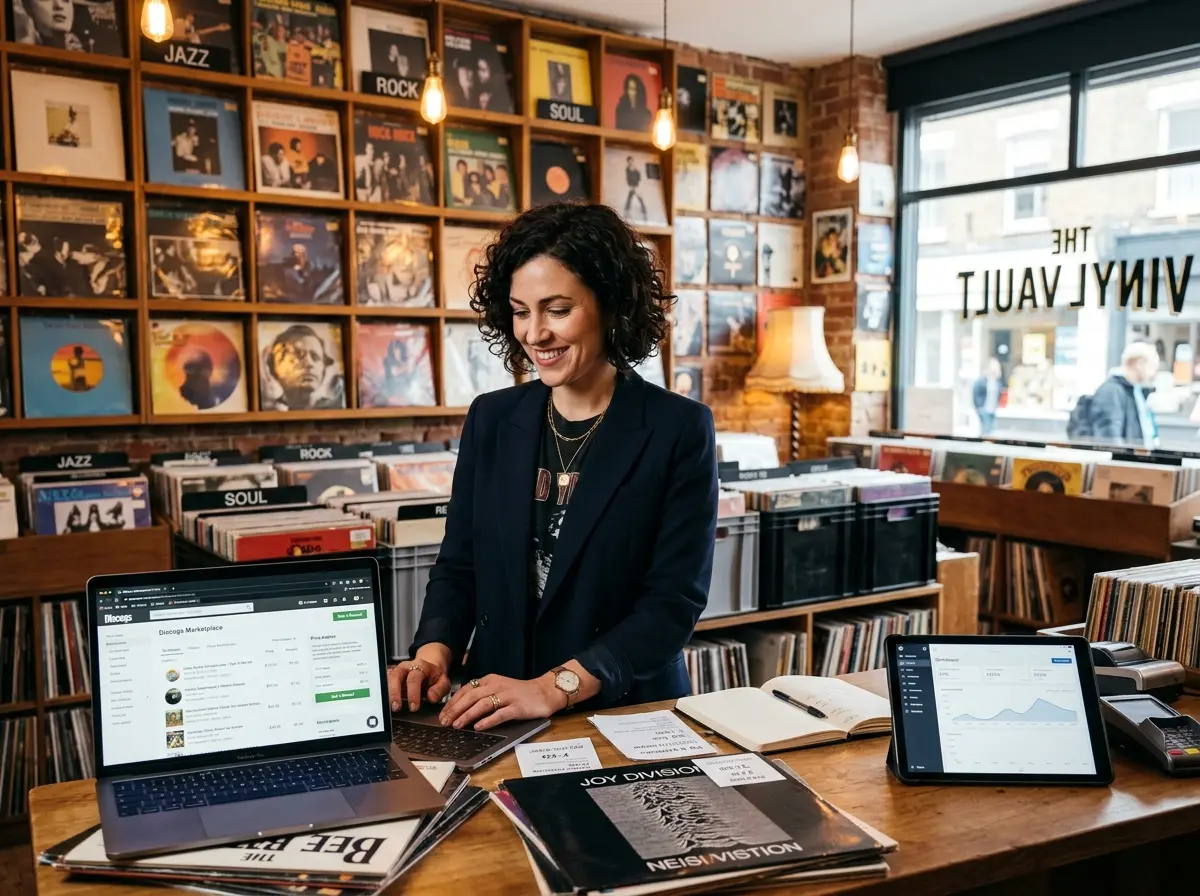
Discogs is the world's largest online marketplace for physical music — records, CDs, cassettes, and more — with over 17 million buyers and sellers worldwide. For a brick-and-mortar record store, it represents a massive opportunity to reach collectors and audiophiles you'd never meet through foot traffic alone. But here's the thing nobody tells you upfront: successfully selling on Discogs while running a physical store is a logistics puzzle that will humble you fast if you go in without a plan.
This guide is here to save you from that humbling experience. We'll walk you through setting up your Discogs seller account, managing inventory across both channels, and keeping the whole operation from descending into chaos. Let's dig in.
Getting Started on Discogs the Right Way
Setting Up Your Seller Account and Marketplace Profile
Creating a Discogs account is free and takes about ten minutes. But setting up a professional seller profile that actually converts browsers into buyers? That takes a bit more intention. Start by going to Discogs.com, creating an account, and navigating to the Marketplace section to activate your seller status. You'll be asked to verify your PayPal or Stripe account for payments, set your shipping policies, and define your grading standards.
On that last point: do not skip the grading part. Discogs uses the Goldmine grading scale (Mint, Near Mint, Very Good Plus, etc.), and buyers take it seriously. Grade too generously and you'll be drowning in return requests. Grade too harshly and your listings won't sell. Be honest, be consistent, and when in doubt, go one grade lower. Your feedback score will thank you.
Your seller profile should also include a clear description of your shop, your return policy, and your shipping timeframes. Think of it as your storefront window on the internet — make it look like a place people actually want to shop.
Listing Records Efficiently: Catalog Numbers Are Your Best Friend
Here's the beautiful thing about Discogs: most of the hard work of creating a product listing has already been done by the community. The Discogs database contains over 15 million releases, meaning you can usually scan a barcode or search a catalog number and instantly match your record to an existing entry — complete with tracklist, label info, and release year. You just need to add your condition, price, and any relevant notes.
For a store with thousands of records to list, invest in a USB barcode scanner or use the Discogs mobile app to scan barcodes directly. It dramatically speeds up the listing process. For records without barcodes (hello, every pressing from before 1980), you'll be doing manual lookups using the catalog number, matrix number (the code etched into the run-out groove), and label details. It's a bit of a treasure hunt — which, honestly, is either charming or infuriating depending on what day you're having.
Keeping Your In-Store and Online Inventory in Sync
The Double-Sale Problem — and How to Avoid It
The nightmare scenario every multi-channel record seller eventually faces: you sell a copy of Fleetwood Mac's Rumours in your shop on Saturday afternoon, and on Sunday morning you discover someone bought the same copy on Discogs. Now you owe someone a record you don't have, your feedback score is about to take a hit, and your morning coffee tastes like stress.
The solution isn't glamorous, but it works: remove records from your Discogs listings immediately when they sell in-store. This requires discipline and a clear process — ideally a point-of-sale system that either integrates with Discogs directly or triggers a manual workflow. Some POS systems designed for record stores (like Lightspeed or VinylHub-adjacent tools) offer varying degrees of Discogs integration. It's worth researching what works best for your setup and volume.
Alternatively, some store owners maintain a separate "online-only" section of their physical inventory — records that are listed on Discogs and not available for in-store browsing until they're pulled from the platform. It's not the most elegant solution, but it works.
Workflow Tips for Small Teams
If you're running a small operation — say, you and one or two part-time staff — workflow clarity is everything. Designate one person responsible for pulling and packing Discogs orders each day, and set a consistent order cutoff time for same-day shipping. Create a simple checklist for each order: pull the record, verify condition, pack securely (more on that in a moment), print the label, mark as shipped on Discogs, and update inventory. It sounds basic because it is — and that's the point. Simple systems get followed. Complicated ones get ignored.
Running a Smarter Shop With a Little Help From Technology
Managing online orders, greeting walk-in customers, answering the phone, and actually knowing where anything is in your store is a lot for a small team to handle simultaneously. This is where Stella, an AI robot employee and phone receptionist, can quietly make your life easier.
For your physical location, Stella stands inside your shop as a friendly kiosk, greeting customers as they walk in, answering questions about your hours, policies, and current deals, and freeing up your staff to focus on packing orders and helping serious buyers. She can also handle your incoming phone calls 24/7 — so when a collector calls at 9pm asking whether you carry original UK pressings of a specific artist, Stella has the information ready and handles it professionally without pulling anyone away from closing tasks. At just $99/month with no upfront hardware costs, she's a practical addition for any indie record store trying to do more with less.
Shipping, Pricing, and Keeping Buyers Happy
Packing Records So They Actually Arrive in One Piece
Shipping vinyl is not like shipping a book or a sweater. Records are fragile, they warp, and postal carriers treat packages with a level of care that can charitably be described as "indifferent." The standard for Discogs sellers is to use rigid mailers — corrugated cardboard mailers specifically designed for records — with the record inside its sleeve, inside a poly sleeve, inside the jacket, inside the mailer. Add a "Do Not Bend" stamp or sticker. For valuable or delicate records, add corner protectors and an extra layer of cardboard on each side.
Buyers notice good packaging and they definitely notice bad packaging. A record that arrives warped or with seam splits due to poor packing will generate negative feedback faster than almost anything else. The extra thirty seconds and fifty cents in materials is absolutely worth it.
Pricing Strategically Without Undercutting Yourself
Discogs shows you the sales history for every release, which is one of the most useful tools available to any record seller. Before you price a record, check the last sold prices for comparable copies in the same condition. Pricing significantly below market might seem like a good way to move inventory quickly, but it trains buyers to expect discounts and undervalues your stock — especially for rarer pressings.
A reasonable approach is to price at or slightly below the median sale price for your condition grade, factoring in your shipping costs. Remember that Discogs charges an 8% seller fee on each transaction, so build that into your math. For common records, competitive pricing matters more. For rare or collectible pressings, don't be afraid to price at the higher end — the right buyer will find it, and they'll pay for quality.
Building Feedback and Reputation Over Time
On Discogs, your feedback score is your currency. New sellers should focus on fast shipping, accurate grading, and responsive communication to build their rating quickly. Message buyers with tracking information proactively. If something goes wrong — a record is damaged in transit, a grading error slips through — handle it generously and immediately. A well-handled problem often generates better feedback than a transaction where nothing went wrong at all. Over time, a strong feedback score will make your listings more competitive even when your prices aren't the lowest.
A Quick Reminder About Stella
Stella is an AI robot employee and phone receptionist built for businesses of all kinds — including indie record stores juggling foot traffic and online orders at the same time. She greets customers in-store, answers calls around the clock, and keeps your operation running professionally even when your hands are covered in bubble wrap and packing tape. At $99/month with no hardware costs to get started, she's worth a look.
Your Next Steps: From Zero to Discogs Seller
Selling on Discogs alongside your physical store is genuinely one of the better revenue opportunities available to independent record shops today. The market is established, the buyers are passionate, and the infrastructure is already built — you just have to show up with good inventory, honest grading, and a reliable process.
Here's where to start this week:
- Create your Discogs seller account and complete your profile with clear policies and a professional description.
- Start listing your slowest-moving inventory first — the records that have been sitting in your bins for months are the best candidates for online buyers who know exactly what they're looking for.
- Set up a packing station with supplies ready to go so fulfillment doesn't become a daily scramble.
- Establish a daily order processing routine and assign clear ownership to avoid the double-sale problem.
- Check your pricing against sales history before every listing — don't guess.
The record store isn't dead. It's just learned to sell in two places at once. With the right systems in place, your shop can keep the in-store magic alive while quietly shipping vinyl to collectors in cities you'll never visit — and that's a pretty good business model.