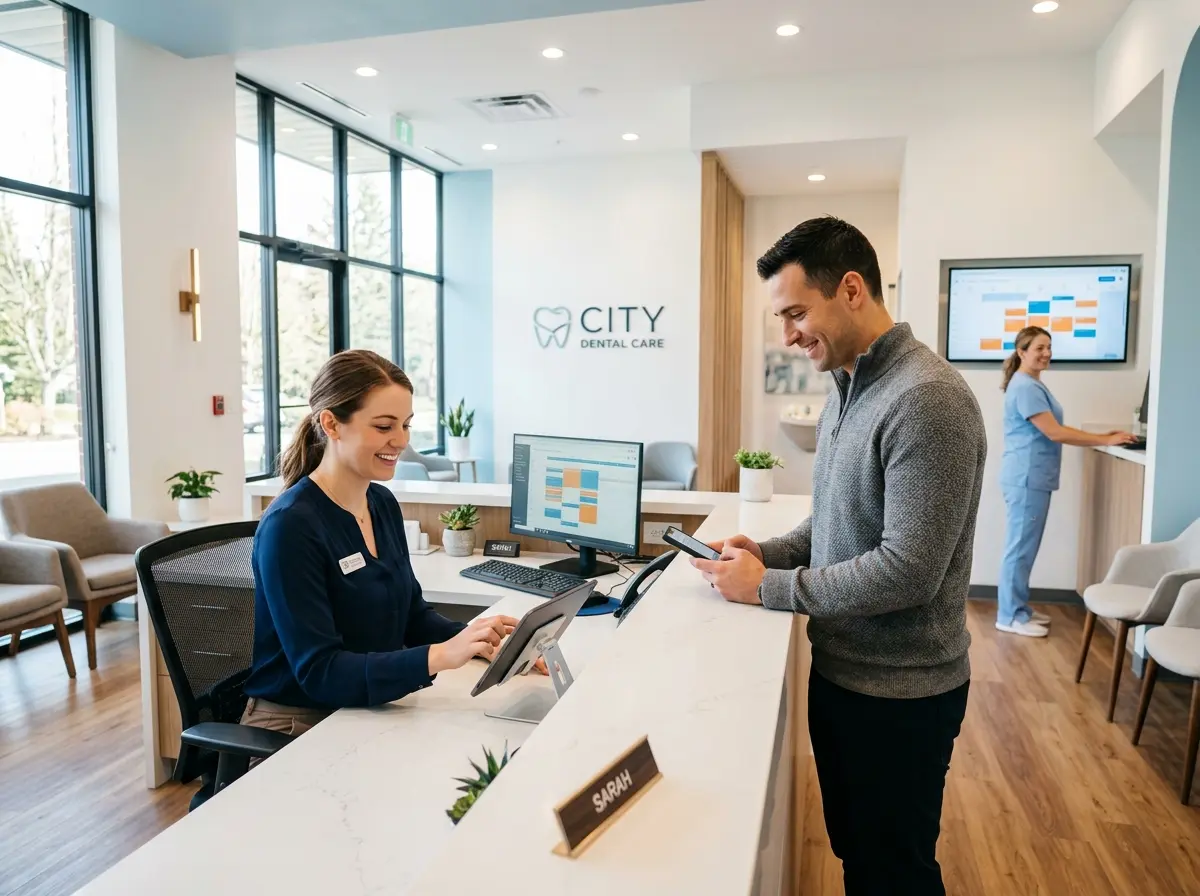
First Impressions: You Never Get a Second Chance (Especially Online)
Let's be honest — before a single customer walks through your door or picks up the phone to call you, they've already formed an opinion about your business. They've Googled you, skimmed your website, maybe tried to reach you after hours and got a voicemail that still references your 2019 holiday hours. First impressions happen fast, and increasingly, they happen digitally — long before anyone shakes a hand or smells your lobby's signature candle.
This post breaks down exactly how to redesign your client intake experience so that first impressions work for you — not against you.
The Anatomy of a Broken Intake Experience
Where Most Businesses Lose Customers Before They Even Arrive
According to a study by Salesforce, 80% of customers say the experience a company provides is just as important as its products or services. Yet intake processes are often an afterthought — cobbled together over years with a form here, a phone script there, and a sticky note on the front desk that says "ask them how they heard about us."
The Hidden Cost of Friction
Friction is the enemy of conversion. Every extra step, every moment of confusion, every unanswered question in your intake process is a small leak in your revenue bucket. A prospective client who can't easily figure out how to book an appointment, get a price estimate, or find out if you accept their insurance isn't going to call back. They're going to move on. Research from HubSpot suggests that companies that respond to leads within an hour are seven times more likely to qualify that lead than those who wait even 60 minutes. Speed, clarity, and convenience aren't just nice-to-haves — they're revenue drivers.
Common Intake Mistakes That Are Quietly Hurting You
- No after-hours coverage — Customers don't only have questions between 9 and 5. If nobody answers and no system handles it, that lead is gone.
- Redundant data collection — Asking customers to provide the same information multiple times signals disorganization and wastes their time.
- Vague or buried contact options — If someone has to scroll three pages to find your phone number, you've already failed.
- Impersonal or confusing intake forms — Long, jargon-filled forms with no clear purpose make people abandon ship before they even start.
- Inconsistent messaging across channels — If your website says one thing, your staff says another, and your voicemail says a third, confusion erodes trust fast.
How Technology Can Rescue Your First Impression
Bridging the Gap Between Digital and In-Person
One of the most effective ways to modernize your intake experience is to deploy tools that work consistently across every channel your customers use — web, phone, and in-person. This is where AI-powered solutions are making a real difference for businesses of all sizes. Stella, an AI robot employee and phone receptionist, is one example of a tool that handles multiple intake touchpoints simultaneously. For businesses with a physical location, Stella stands inside the store as a human-sized kiosk, greeting customers proactively, answering product and service questions, and collecting intake information conversationally — no clipboard required. For phone interactions, she answers calls 24/7 with the same business knowledge she uses in person, ensuring that a customer calling at 11 PM gets the same quality of engagement as one walking in on a Tuesday morning.
Stella also includes built-in intake forms that work conversationally during phone calls, at the kiosk, or on the web — feeding directly into a built-in CRM with custom fields, tags, notes, and AI-generated customer profiles. Instead of manually entering data collected on paper, your team has organized, actionable customer information waiting for them. That's the kind of intake experience that makes both your staff and your customers breathe a little easier.
Redesigning Your Intake: A Practical Playbook
Start With the Customer Journey, Not the Form
Make It Conversational, Not Interrogative
Close the Loop With Confirmation and Communication
Quick Reminder About Stella
Stella is an AI robot employee and phone receptionist that greets customers in-store, answers phones 24/7, manages intake forms, and organizes customer data through a built-in CRM — all for $99/month with no upfront hardware costs. She works across virtually every industry and is always ready to represent your business professionally, without coffee breaks or sick days. If your intake process could use a reliable, consistent, and frankly overachieving team member, she's worth a look.
Your Next Steps: Build a First Impression Worth Having
From there, work toward a cohesive intake experience that feels consistent regardless of how a customer first connects with you. Whether they walk in, call in, or click in, the message, the tone, and the quality of engagement should be recognizably yours. That consistency is what turns a first impression into a lasting one.
Remember: your competitors are probably still using that pen-on-a-chain. This is your opportunity to do better — and to make sure every customer who encounters your business walks away thinking, "That was impressively easy." Because in a world full of friction, easy is remarkable.